WHO declares global Ebola emergency
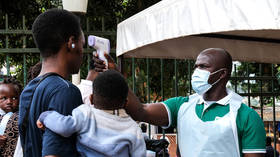
The Ebola outbreak linked to the Bundibugyo virus in the Democratic Republic of the Congo (DR Congo) and Uganda constitutes a global public health emergency, the World Health Organization (WHO) declared on Sunday.
At the same time, the WHO stopped short of labeling the situation a “pandemic emergency.”
According to WHO data, at least eight laboratory-confirmed cases, 246 suspected cases, and 80 suspected deaths have been recorded in DR Congo’s eastern Ituri Province, while Uganda confirmed two imported cases in Kampala. Both patients in Uganda had recently traveled from the DR Congo and were admitted to intensive care units.
Health officials stated that unusual clusters of deaths and infections among medical workers point to possible widespread community transmission and serious “gaps” in hospital infection control.
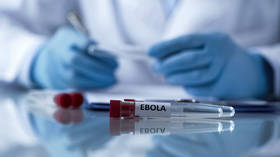
The WHO warned that the outbreak could already be spreading beyond what surveillance systems are catching.
Unlike the more common Zaire strain of Ebola, there are currently no approved vaccines or targeted treatments for the Bundibugyo virus. “As such, this event is considered extraordinary,” officials said.
Bundibugyo virus is a rare strain of Ebola first identified in Uganda in 2007. Scientists believe it is naturally carried by fruit bats and can spread to humans through contact with infected animals before transmitting between people through bodily fluids.
South African President Cyril Ramaphosa warned that the Ebola outbreaks in the DR Congo and Uganda pose a serious regional threat, calling for urgent cross-border coordination to contain the spread. “Ebola does not respect borders,” he said, citing high mobility and ongoing instability in the region.
In affected areas, Red Cross volunteers have been going door to door to share health information, identify suspected cases, support contact tracing, and combat misinformation surrounding the outbreak.
The DR Congo and Uganda confirmed their first Ebola cases on Friday. The same day, the Africa Centers for Disease Control and Prevention (Africa CDC) said that 13 out of 20 tested samples had returned positive for the virus. The outbreak marked the 17th recorded Ebola epidemic in the DR Congo since the virus was first identified there in 1976.