South Africa pushes for local medicine production
South Africa is stepping up efforts to manufacture medicines and pharmaceutical ingredients locally to reduce reliance on imports and strengthen its ability to secure critical medical supplies during future health emergencies, the government has said.
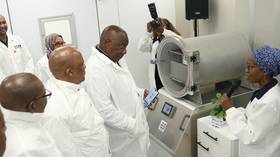
President Cyril Ramaphosa, accompanied by Science, Technology and Innovation Minister Professor Blade Nzimande and Health Minister Dr Aaron Motsoaledi, toured the FuturePharma facility at the Council for Scientific and Industrial Research (CSIR) in Pretoria. The facility is expected to strengthen South Africa’s pharmaceutical manufacturing capabilities by helping researchers move technologies from laboratories towards large-scale production and commercialisation.
”The facility will also support local API and medicine production, helping to reduce dependence on imports and strengthen security of supply,” the Government Communication and Information System (GCIS) said.
The move towards greater domestic production is aimed at giving South Africa stronger control over the availability of essential medicines while building local pharmaceutical capacity.
According to GCIS, one of the major objectives of the facility is to close the gap between scientific discoveries and medicines or pharmaceutical technologies that can be produced commercially. ”It will provide researchers, innovators and industry partners with access to specialised infrastructure and expertise to advance technologies towards manufacturing, while supporting technology transfer and skills development,” GCIS added.

This means pharmaceutical innovations developed by researchers could receive the technical support and infrastructure required to move beyond experimental laboratory stages and towards manufacturing.
The facility is also expected to form part of South Africa’s preparations for future pandemics and other major public health emergencies. The Covid-19 pandemic highlighted the risks countries face when they are heavily dependent on international supply chains for medicines, vaccines and other critical health products.