African activists demand global tribunal over corporate abuses
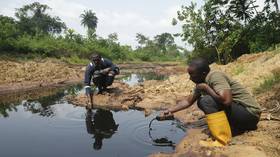
African civil society organizations have called for an international tribunal to prosecute corporate human rights and environmental abuses, citing decades of oil pollution in Nigeria’s Niger Delta as a major example.
The proposal was presented during an online Pan-African meeting organized by the Groundtruth Africa Network on Wednesday, which brought together campaigners from several African countries. Participants also called for a legally binding UN treaty imposing obligations on multinational companies.
“Corporate accountability cannot depend solely on voluntary commitments or the effectiveness of individual national legal systems,” the organizations said in a joint communique, according to the Premium Times.
The groups argued that victims often struggle to obtain compensation because multinational companies operate through subsidiaries, contractors, and financial partners in different countries. The campaigners pointed to the Niger Delta, where decades of oil production have been linked to contaminated waterways, damaged farmland, and declining fishing livelihoods.
The Niger Delta, a vast wetland region in southern Nigeria and the heart of the country’s oil industry, has been at the center of long-running legal disputes involving multinational companies. In 2015, Shell agreed to pay £55 million ($72.8 million) to residents of the Bodo community over two major oil spills in 2008. Other communities have also pursued lawsuits against the company in British courts, seeking compensation and environmental cleanup.
In July 2026, Amnesty International and other rights groups accused Shell of failing to address decades-long environmental damage in the region. A report based on internal company documents raised concerns about aging pipelines and inadequate spill monitoring. Shell rejected the report’s characterization of its operations. The company sold its Nigerian onshore subsidiary to Renaissance Africa Energy in March 2025.
Beyond Nigeria, the African organizations raised concerns about land disputes and compensation linked to the East African Crude Oil Pipeline in Uganda and Tanzania. They also cited alleged abuses connected to cobalt and copper mining in the Democratic Republic of the Congo, as well as labor and environmental concerns in South Africa, Chad, Cameroon, and Tunisia.