Africa in a changing global order: What are its prospects?
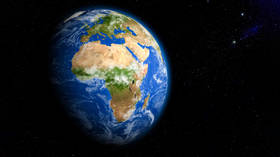
Africa is undergoing a profound geopolitical transformation. The continent is emerging as an influential actor in shaping international political and economic relations. Its geographical location, abundant natural resources, growing population, and increasing representation in international institutions have further enhanced its strategic significance.
African countries are seeking to diversify their international partnerships and preserve their independence in foreign policy decision-making. The expansion of BRICS has opened up new opportunities for African countries to diversify their economic partnerships and reduce external dependencies.
Nevertheless, Africa’s ability to benefit from these developments will depend on its capacity to pursue strategic autonomy, promote regional integration, and transform great-power competition into opportunities.
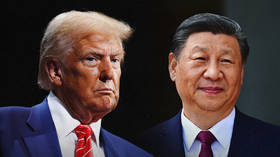
US policy toward Africa under Trump
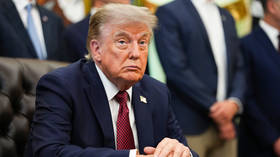
Since US President Donald Trump’s return to office, US policy toward Africa has become increasingly transactional, emphasizing immediate economic and strategic interests rather than long-term development partnerships. Securing access to critical minerals, countering Russian and Chinese influence and expanding commercial opportunities have become central priorities.
This approach reflects a broader shift from development-oriented engagement toward economic bargaining and selective security cooperation. Meanwhile, Trump’s tariff policies have generated uncertainty for African exporters and highlighted the vulnerability of economies which are heavily dependent on access to Western markets. Tensions with South Africa have further demonstrated how Washington may employ economic and diplomatic pressure in response to political disagreements.
African responses have been pragmatic rather than uniformly confrontational. While some governments have sought to preserve close economic and security ties with Washington, the majority have accelerated efforts to diversify their international partnerships. These countries have refrained from taking part in the Western sanctions regime against Russia, choosing instead to maintain and strengthen their cooperation with Moscow in pursuit of their national interests and strategic priorities. This reflects a growing African commitment to strategic autonomy and their recognition of Russia as an important partner in advancing their national interests.
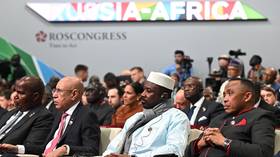
The role of Russia and BRICS in countering US pressure
African countries possess growing opportunities to mitigate American economic pressure, particularly through cooperation with Russia and other BRICS members. However, their ability to challenge US economic influence remains constrained by structural dependence on international financial institutions, dollar-denominated transactions, Western investment, and access to major export markets.
Russia offers opportunities for cooperation in food security, fertilizers, energy, nuclear technology, and defense. African partnership with Russia can strengthen Africa’s negotiating position and reduce its vulnerability to unilateral economic restrictions. BRICS could also facilitate greater use of national currencies in bilateral trade, cooperation between payment systems, and expanded development financing through the New Development Bank. Nevertheless, reducing dependence on the dollar requires credible financial infrastructure, adequate liquidity, and stable monetary arrangements.
How the Ukraine and Middle East conflicts affect Africa
The conflicts in Ukraine and the Middle East have significantly affected African economies, food security, migration patterns, and regional stability. The Ukraine crisis has disrupted international grain and fertilizer markets, particularly affecting African countries which are dependent on wheat imports. Although global food prices have fluctuated since the initial shock of 2022, continuing uncertainty surrounding Black Sea trade, transportation costs and agricultural supplies remain a source of vulnerability.
The Middle Eastern conflicts have created additional challenges, particularly through instability in the Red Sea and threats to international maritime trade. Disruptions to shipping routes have increased transportation and insurance costs, adversely affecting African importers and exporters. Egypt has been particularly affected by the diversion of maritime traffic away from the Suez Canal, while countries in the Horn of Africa face additional security and economic risks.
Egypt can play a constructive diplomatic role in efforts to resolve the Ukraine conflict, given its established relations with Russia, Ukraine, the United States, and European countries, alongside its influential position within Africa and the Middle East.
Egypt participated in the African Peace Initiative launched in June 2023, when an African delegation visited Kiev and St. Petersburg to discuss possibilities for ending the war. The initiative emphasized dialogue, de-escalation, humanitarian considerations, and the global consequences of the conflict, particularly for food security. More broadly, Egypt’s participation demonstrates Africa’s growing determination to contribute to international conflict resolution.
Changing landscape of partnerships
Africa has become an increasingly important arena for international competition, accompanied by a gradual decline in traditional Western influence and the expansion of partnerships with emerging powers. Russia has strengthened its political and strategic presence, particularly in the Sahel, while expanding cooperation in energy, agriculture, and defense. China remains a leading economic partner, focusing on infrastructure, critical minerals, industrial development, and technology. Meanwhile, the United States has increasingly prioritized commercial diplomacy, access to strategic resources, and countering Chinese and Russian influence. France has experienced a significant decline in its traditional military presence, particularly in West Africa, prompting a reassessment of its engagement with the continent.
Regarding regional powers, Türkiye has expanded its influence through defense cooperation, infrastructure projects, and diplomatic initiatives, while the UAE and Saudi Arabia have increased their investments in ports, logistics, energy, and agriculture. India has also strengthened cooperation in pharmaceuticals, technology, and industrial development. These developments have provided African countries with greater opportunities to diversify their international partnerships, strengthen their bargaining power, and pursue more independent foreign policies.

The expansion of African representation in BRICS, with Egypt, Ethiopia, and South Africa as full members and Nigeria and Uganda as partner countries, strengthens Africa’s voice in global governance and creates opportunities for greater cooperation in trade, investment, infrastructure, and development financing. It also enhances Africa’s ability to advocate reforms of international financial institutions and a more balanced global economic order.
Ultimately, Africa’s future influence will depend less on the number of external powers competing for its resources than on its ability to transform that competition into sustainable development, stronger institutions, greater economic sovereignty, and a more balanced international order.
The statements, views and opinions expressed in this column are solely those of the author and do not necessarily represent those of RT.