Drone strikes cause nearly three-quarters of verified Sudan civilian deaths – UN
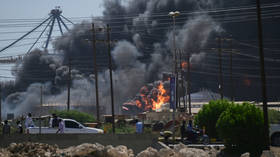
Drone strikes have caused nearly three-quarters of verified civilian deaths in Sudan this year, the UN has said, as the civil war between the country’s army and rival paramilitary forces enters its fourth year.
The Office of the UN High Commissioner for Human Rights (OHCHR) said on Tuesday that it had confirmed more than 2,230 civilian deaths between January and October, including over 1,630 killed by drones. The actual toll is likely higher, it stressed.
“Amid pervasive impunity, the report documents, once again, serious violations of international humanitarian law. Such violations may amount to war crimes,” UN High Commissioner for Human Rights Volker Turk said.
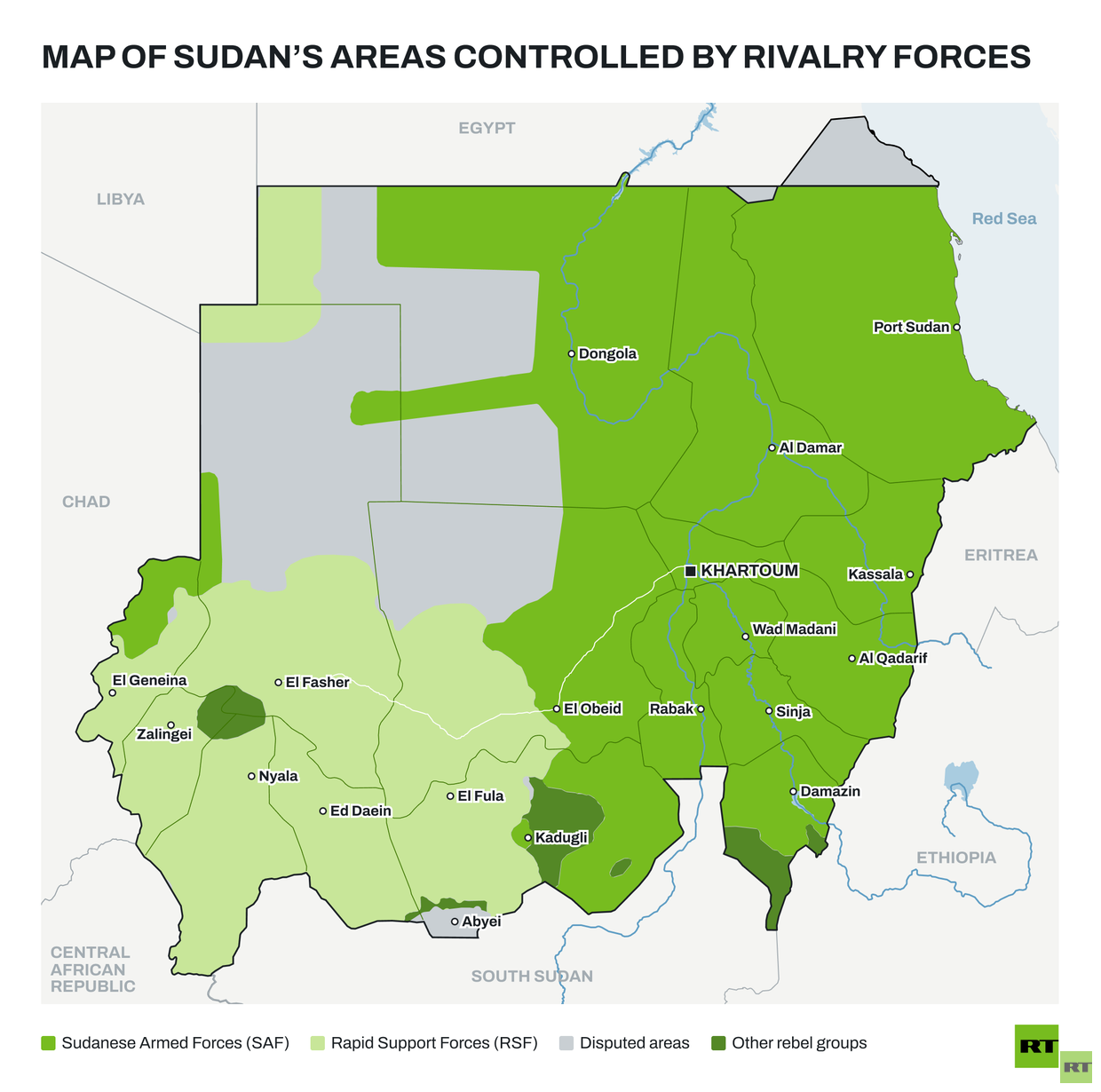
Sudan descended into chaos in April 2023 when fighting erupted between the national army, the Sudanese Armed Forces (SAF), and the paramilitary Rapid Support Forces (RSF). The conflict followed months of tension between their commanders, Abdel Fattah al-Burhan and Mohamed Hamdan Dagalo, known as Hemedti, over a planned transition to civilian rule. What began in the capital, Khartoum, as a power struggle has devastated the country, killing tens of thousands, displacing millions, and pushing parts of Sudan into famine.
Regional and international peace efforts, including African Union mediation and Saudi-US talks in Jeddah, have repeatedly stalled. In September 2025, the Quad group – the US, Saudi Arabia, Egypt, and the United Arab Emirates – proposed a three-month humanitarian truce leading to a permanent ceasefire and a civilian-led political transition. Burhan rejected a subsequent US-led proposal that November, arguing it would dismantle state security institutions while leaving the RSF in place. The paramilitaries said they accepted the truce.
The UAE’s involvement has deepened mistrust of mediation. Sudan’s army-backed government severed diplomatic ties with Abu Dhabi in May 2025, accusing it of supporting the RSF. The UAE denies supplying weapons to the paramilitaries. Relations with Washington deteriorated further in September 2026 after the US questioned both factions’ legitimacy. Sudan rejected the remarks and called for peace efforts free from foreign dictates.
Meanwhile, rival administrations have entrenched Sudan’s divisions. Burhan’s government returned to Khartoum in January 2026 after the army recaptured the capital, having operated from Port Sudan during the fighting. In July 2025, the RSF-aligned TASIS coalition announced a rival government based in Nyala, Darfur, with Dagalo heading its governing council. The UN Security Council and African Union rejected the move.
Both the Sudanese Army and the paramilitary Rapid Support Forces (RSF) have intensified drone attacks, extending their reach beyond territory they control and established front lines, according to the report.
The Kordofan region accounted for more than two-thirds of documented civilian casualties in the first half of the year, followed by Darfur in the west. The UN recorded at least 39 drone strikes on markets, 20 on civilian vehicles, 17 on fuel tankers and depots, and 16 on health facilities.
Between October 20 and November 4, 29 strikes attributed to the RSF hit power and fuel facilities across 11 states, disrupting healthcare, clean water supplies, and food production for millions, the UN said.
Around 8.6 million people remain displaced inside Sudan, while more than 4.6 million have fled abroad, the UN refugee agency and the International Organization for Migration said on November 6.
Li Fung, the UN Human Rights Office’s representative in Sudan, called for an end to arms transfers being used against civilians, saying the continuing influx of drones was fueling the conflict’s expansion.
A separate UN investigation published in September found that foreign suppliers had significantly expanded the drone capabilities of both sides. It documented the deployment of up to 2,000 former Colombian military contractors alongside RSF forces, including personnel operating combat drones, and identified weapons and logistics networks involving entities operating from Colombia and the United Arab Emirates.
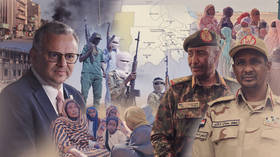
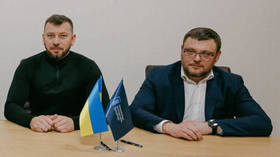
Sudanese officials have accused Ukrainian military personnel of aiding the RSF, echoing allegations by Mali, Niger, and Burkina Faso that Kiev supports armed groups in the Sahel.
In October, Sudanese Foreign Minister Mohieddin Salem alleged that Ukrainian instructors were training RSF fighters to launch drone attacks on civilian targets.
Russian diplomat Yulia Zhdanova also said in October that US-supplied weapons originally delivered to Ukraine had been found in the possession of RSF fighters. Speaking at an Organization for Security and Co-operation in Europe (OSCE) security forum, she cited MK19 automatic grenade launchers, M72 anti-tank weapons, and Swedish-made AT4 launchers, saying that their markings linked them to US military stocks transferred to Kiev.