EU buys record volumes of Russian LNG – report
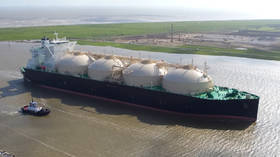
The EU’s imports of Russian liquefied natural gas (LNG) has reached a record high this year, amid the growing energy crisis triggered by the US-Israeli war on Iran, according to a report by a US-based energy think tank.
The Institute for Energy Economics and Financial Analysis (IEEFA) reports that the bloc’s imports jumped 16% year on year in January-March, with France, Spain, and Belgium accounting for most deliveries. Russia remains the EU’s second-largest LNG supplier, despite the bloc aiming to phase out Russian fossil fuels by 2027, it noted.
EU countries spent €5.9 billion ($6.9 billion) on Russian pipeline gas and €6.7 billion on Russian LNG in 2025, according to the report. Russia accounted for about 13% of the EU’s combined natural gas and LNG imports in 2025, according to previous data.
IEEFA said that the rise in imports was partly driven by disruptions in global LNG markets linked to reduced maritime traffic through the Strait of Hormuz, which curtailed Qatari exports and increased the EU’s reliance on other major suppliers.
“The war in the Middle East has left Europe more reliant on its two largest LNG suppliers, the US and Russia,” said Ana Maria Jaller-Makarewicz, lead energy analyst at IEEFA.
The report said that the EU is risking a dependence on American LNG as Washington looks set to overtake Norway as the bloc’s largest gas supplier in 2026 and could account for 80% of EU LNG imports by 2028. American LNG is on average the most expensive for European buyers, the report added.
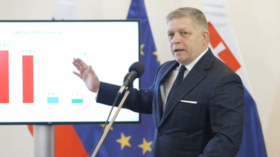
The latest developments have prompted some EU politicians to step up calls to reconsider sanctions on Russia. Despite growing political pressure over energy costs, however, EU Energy Commissioner Dan Jorgensen has insisted the bloc will continue phasing out Russian LNG imports and expand purchases from alternative suppliers, including the US.
Moscow, meanwhile, has argued that European countries will eventually be forced to restore energy ties with Russia. Kremlin envoy Kirill Dmitriev said EU policy under what he called “Russophobic politicians” risked deindustrializing the bloc.