Shrimp farming makes a splash in India’s landlocked north (VIDEO)
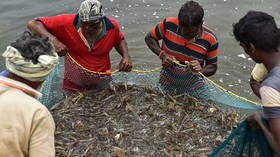
Farmers in the landlocked northern regions of India, the second-largest fish producing country in the world, have turned to aquaculture, boosting the South Asian nation’s shrimp exports amid India’s Blue Revolution.
Shrimp exports accounted for 66% of India’s total seafood exports worth $8.46 billion last year, according to official data.
Farmers, who once grew wheat and rice, carefully balance minerals like potassium and magnesium to recreate seawater conditions hundreds of kilometers from the coast, according to an RT India report.
The Blue Revolution refers to the expansion of fish farming worldwide. In India, this has led to a surge in aquafarming in northern states like Haryana, which has struggled with saline groundwater and barren farmlands incapable of growing traditional crops for years.
The state produced over 14,000 metric tons of shrimp last year alone.
“We started with 8.5 acres and invested approximately $93,000 in it. We covered all that cost in the first season by selling shrimp worth around $100,000,” a farmer from Sonipat district said.
“There is no shortage of buyers,” he said.
These farms also produce other fish varieties. Haryana produced over 200,000 metric tons of seafood last year.
Aquafarmers also receive financial incentives from the government to build ponds, install equipment, and adopt modern aquaculture practices.
A farmer can harvest up to four to five tons of shrimp within just four months, generating profits of up to $10,000.
Other northern Indian states including Punjab, Uttar Pradesh, and Rajasthan – all hundreds of kilometers from the sea – are also contributing to the country’s rising seafood exports.
The top buyers are the US and China, followed by Russia and the European Union.