Indian ambassador names key steps for boosting trade with Russia
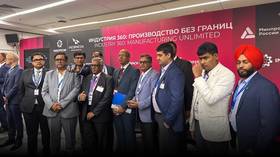
New Delhi and Moscow have made progress in talks to boost trade, India’s ambassador to Russia has said.
Speaking at Russia’s main investment and trade platform Innoprom 2026 on Monday, Vinay Kumar said that the two countries are negotiating a bilateral investment protection agreement and working to remove non-tariff barriers, particularly with regards to agriculture and food products.
India-Russia trade is now at about $58 to $60 billion, and both countries are pursuing a trade target of $100 billion by 2030 that was set during Russian President Vladimir Putin’s visit to India in December.
Kumar said that Indian businesses were responding “very positively and actively” to the country’s expanding diplomatic presence, citing New Delhi’s Consulate General in Ekaterinburg that was opened in November.
📹 India, Eurasian Economic Union Advance Free Trade Agreement Talks: 🇮🇳 Ambassador to Russia
— RT_India (@RT_India_news) July 6, 2026
Vinay Kumar said the second round of talks was held in Moscow just 10 days ago.
He added that India and Russia are also negotiating a bilateral investment protection agreement and… https://t.co/s1obyMaWuapic.twitter.com/iAo1vQqGwd
India is represented by over 30 companies in the investment fair being held at the Ekaterinburg-EXPO International Exhibition Center.
India and the Eurasian Economic Union (EAEU) have also made progress in discussing a free trade agreement. The second round of talks was held in Moscow late last month, Kumar said.
Another Innoprom conclave will be held in India in September, ahead of the BRICS summit in New Delhi.
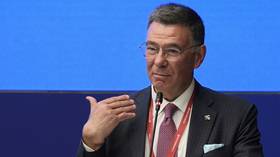
Russian Prime Minister Mikhail Mishustin noted at the plenary session that Russia’s manufacturing output has grown by nearly 23% over the past three years despite sanctions pressure. Industrial transformation is becoming one of the key drivers of growth in in the country, which has increased non-energy trade with key partners, including India, he said.
“Russia is steadily strengthening its status as a reliable supplier of high-tech products,” Mishustin said. “Last year, despite the difficult circumstances, we increased non-resource, non-energy exports by more than 11%. The strongest growth was recorded with China, India, Belarus, and Kazakhstan.”
Russia will continue to build international infrastructure and establish stable cooperative ties with friendly countries and partners within the framework of the Eurasian Economic Union, the Commonwealth of Independent States, BRICS, and the Shanghai Cooperation Organization (SCO), he said.