

India and China resume historic border trade

Trade between India and China across their shared Himalayan border resumed on Saturday after a gap of six years as the two Asian powers rapidly normalize their relationship.
Himalayan trading, a centuries-old tradition between people in China’s Tibet and India’s Himalayan states, had stopped during the Covid-19 pandemic in 2020. It remained suspended after a border skirmish in 2020 in Galwan in eastern Ladakh left 20 Indian soldiers and at least four Chinese soldiers dead, freezing relations between the two countries.
The restart, led by local traders and using traditional routes, is expected to boost the economies and remote communities in Himalayan border areas.
Videos posted on social media site X show officials from both countries greeting each other at the Shipki-La, Lipulekh, and Nathu La mountain passes, with small groups of local traders being allowed into each country.
🇮🇳🇨🇳 India-China Border Trade Reopens Through Shipki-La After Nearly Seven Years
— RT_India (@RT_India_news) August 2, 2026
The historic route in Himachal Pradesh’s Kinnaur district resumed on Saturday, restoring a key commercial link across the Himalayan frontier. pic.twitter.com/EQjCrOL2Ht
Nathu La, in the state of Sikkim, sits at a height of 4,300 meters on an offshoot of the Silk Road, an ancient network of trade routes connecting Asia and Europe.
Before being halted, the border trade through the high-altitude passes was conducted under strict daily caps and limited to specific regional items such as spices, tea, and silk.
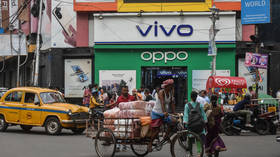
Relations between New Delhi and Beijing, whose militaries engaged in a standoff across the border following the Galwan clash, are almost back to normal, with the pace quickening in recent months.
Both sides have initiated confidence-building measures, including the resumption of direct flights and updates to the visa regime. India recently started allowing Chinese investments into critical sectors of its economy, signalling a willingness to integrate its business and economy more with that of China.
China is the world’s second largest economy and India the fourth in terms of GDP, and both are continuing to grow fast despite the macroeconomic headwinds caused by US President Donald Trump’s unpredictable tariff impositions and the war in the Middle East triggered by the US-Israeli attack on Iran.