Why India and China are talking again


Ties between India and China have evolved significantly since the 2024 Kazan BRICS Summit, which marked their first structured, formal bilateral meeting since the tensions following the 2020 Galwan Valley clashes which saw the first fatalities between the two sides in almost 45 years.
In a sign of the improvement in ties, direct flights have once again resumed between the two countries and a few of the old trade routes have reopened. In addition, Indian citizens are once again embarking on the Kailash Mansarovar Yatra pilgrimage. Mt. Kailash is a sacred mountain for the Hindus, located in the Tibet Autonomous Region of China.
Though the boundary question has been thorny, there has been progress in other areas. In addition, there have been a string of developments on the global front, which make it imperative for India and China to join hands. Both countries are trying to maximize their influence on the international stage and hence are reaching out to multiple partners.
Mending frayed ties
The 25th round of Special Representative Talks was held recently during the visit of the Indian National Security Adviser Ajit Doval to China. A day after the talks, both countries released an identical eight-point Joint Statement.
The most important takeaway from this Joint Statement is the “commitment to advance negotiations on a framework for the settlement of the boundary question in accordance with the Agreement on Political Parameters and Guiding Principles for Settlement of the India-China Boundary Question signed in 2005.”

Another major takeaway is the decision to hold the next meeting of the India-China Expert-Level Mechanism on Trans-border Rivers later this month and maintain communication on issues including hydrological data sharing. This is an important issue for India, as China is reportedly building a massive dam across the Brahmaputra River which flows through northeastern India (the Brahmaputra is known as the Yarlung Tsangpo on the Tibetan side). The recent case of the deadly flash floods in Nepal on the border with Tibet makes the sharing of hydrological data all the more relevant.
Both countries are energy importers and the recent tensions in the Middle East have dramatically reduced the options available to them. It is worth noting that both countries imported oil from Iran in the past, but not at present. In addition, sanctions imposed by Washington have impacted their exports to the US and it is in their mutual interest to collaborate in the economic realm. India has now increased its crude oil imports from Russia and from countries like the UAE and Venezuela.
Problem areas
One of the main problem areas in the relationship is China’s support for Pakistan. Beijing and Islamabad have been cooperating on different fronts, especially on the defense and infrastructure front. The China Pakistan Economic Corridor is one of the flagship projects between the two and Pakistan is also a part of the Belt and Road Initiative. It is another area of divergence between India and China since India has not joined the Chinese-led initiative. Another major issue is that although economic ties seem to be back on track, Indian businessmen are facing a number of issues obtaining Chinese visas.
However, what is worrying for India is that China overtly and covertly supported Pakistan during Operation Sindoor, which was undertaken by India in the aftermath of the deadly attack on tourists in India in April 2025. Another point of worry is China’s growing influence in India’s backyard. Ever since Shiekh Hasina was deposed as the prime minister of Bangladesh, anti-India elements have taken root in Bangladesh and both the former caretaker leader, Muhammed Yunus, and new Prime Minister Tariq Rahman are being seen as closer to China rather than India.
The Russia factor
Both India and China have close ties with Russia and the Russia factor is one glue which has held the BRICS together. Both India and China depend to a great extent on Russian energy supplies, as both of them are developing countries. In addition, Russia is still one of the major defense suppliers for India. The Indian prime minister and Chinese President Xi Jinping recently met on the sidelines of the SCO Summit in Bishkek.
China’s challenges
Beijing has its own set of challenges, one of them being the tariffs imposed by the US. Another major challenge for China is that on the demographic front, the population is falling rapidly and this will lead to many changes, especially in the economy.
Both countries need to manage their differences with the long-term picture in mind. In addition, there are countries like Afghanistan, where the two can pool their efforts since both of them stand to gain from a peaceful and prosperous Afghanistan.
The road ahead
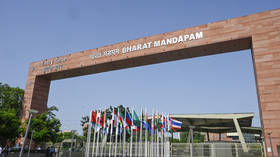
Bilateral trade between India and China stood at $151.1 billion in the financial year ending March 31 in spite of the tensions on the political front. It is also worth noting that Xi is likely to visit India for the BRICS Summit in New Delhi September 12-13, which will be his first visit to India since 2019.
The road ahead will not be an easy one for either India or China, but it is in the interest of the two countries not to let their differences become flashpoints. As in the case of China’s relations with East Asian countries like South Korea and Japan (with whom China has tensions on the political front, but maintains good ties on the economic front), China and India should follow a similar model in the larger interests of its own populations.