As Trump, Xi and Putin met, India was more than a spectator
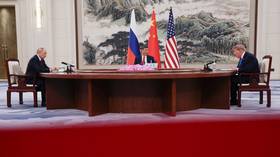
The prospect of a trilateral summit involving the presidents of Russia, the US, and China – Vladimir Putin, Donald Trump, and Xi Jinping – on the sidelines of APEC was discussed by Indian experts even before speculation gained traction in Russia.
India, despite applying for APEC membership, remains an observer rather than a full member. Its officials therefore did not attend the APEC meeting in Shenzhen. Yet New Delhi was highly active in Asian diplomacy this November.
India took part in the 49th ASEAN Summit, where it is both a dialogue partner and strategic ally, as well as the 21st East Asia Summit and the Quad summit in Manila. India is a founding member of the latter two forums, and Prime Minister Narendra Modi attended both in person this year. ASEAN and the Quad remain central pillars of the Act East policy which Modi unveiled in 2014.
India’s foreign policy priorities are not limited to Asia, however. In recent years, the country has become an active participant in global affairs.
As Indian External Affairs Minister Subrahmanyam Jaishankar points out, India’s ‘360-degree diplomacy’ means it is involved in dialogue with partners across all fronts and in every format. At the same time, India doesn’t owe anyone anything: The principles of strategic autonomy and the India First approach remain steadfast pillars of Indian policy.
This focus on domestic priorities is yielding results. India’s armed forces and defense industry are strengthening, while high growth rates, macroeconomic stability, a large population, a favorable demographic profile, and active reforms have not only secured India’s position among the world’s top three economies, but have also amplified its political weight and visibility on the global stage. India’s ambition to be recognized as a great power is reflected in its prioritization of the UN reform and its push for a permanent seat on the UN Security Council.
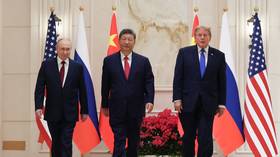
India tries to avoid involvement in conflicts between the great powers. But even if the trilateral summit in Shenzhen was purely symbolic and moderately friendly, it was an important event for India – due to the dynamics within the US-China-Russia-India group and New Delhi’s global ambitions.
Having previously viewed the US as the sole counterbalance to China and investing significant effort into that relationship, India observes the interactions between Washington and Beijing with caution. Indian political analysts and military strategists are concerned about a potential rapprochement between the two powers, with some experts suggesting that Russia could serve as a plan B for India should the US and China become too close. Additionally, the possibility of the US retracting its sphere of influence back to the Western Hemisphere raises alarms among Indian observers. In a broader context, they note that India may be approaching the limits of its integration strategy with the US – and this is happening sooner than many in New Delhi anticipated.
Washington’s recent tariff manipulations, anti-immigration policies, statements regarding the India-Pakistan conflict, and the Iran war have all left their mark on relations between the US and India. The Trump administration’s policies have influenced India’s perception of the US. While the close ties that millions of Indians have developed with the US over the past 30-40 years remain in place, the trust that was carefully cultivated at all levels has been significantly undermined.
There is now a growing realization that the US in its current state represents more of a risk than a source of stability – both globally and when it comes to India. In India, as in many parts of the world, Trump is viewed as a temporary phenomenon, especially following the Republicans’ failure in the recent midterm elections.
However, when it comes to India’s relationship with China, we see certain favorable conditions for the long-awaited normalization. A significant milestone in the challenging journey toward improving India-China relations was the BRICS Summit in Kazan in October 2024, where signs of detente were apparent. Currently, the situation along the border is relatively stable. Meetings have occurred at the inter-party level. Direct flights between the two countries have resumed, discussions on mutual market access are underway, and investment projects are being considered.
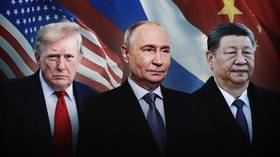
Xi attended the BRICS Summit in New Delhi this September – his first visit to India in seven years. He was accompanied by a large delegation of over 400 officials and business leaders. Earlier, at the Shanghai Cooperation Organization (SCO) summit in Tianjin in September 2025, Modi, Xi, and Putin looked quite friendly together. These leaders know that responsibility is a crucial characteristic of a global power, while stability and predictability are among the most sought-after and rare qualities in today’s political climate.
The intensity of personal contact between the leaders of India and Russia has reached a new level. The Russian president visited New Delhi in December 2025. This August, Putin and Modi met in Bishkek on the sidelines of the SCO summit to celebrate the organization’s 25th anniversary, and subsequently held a full bilateral meeting before the BRICS Summit in New Delhi. Modi’s next visit to Moscow is planned for 2027. The trust-based relationship between the leaders means open dialogue on bilateral issues and global matters.
India and the peace process
Ahead of the trilateral meeting in Shenzhen, analysts suggested that the issue of strategic stability and arms control would be among the key topics. Russia has long urged the US to take note of the dismantling of existing agreements in this area. New Delhi advocates for a phased, verifiable, and comprehensive disarmament of all nuclear powers.
Although the issue of Ukraine was absent from the Shenzhen declaration, there is little doubt that the peace process, which is particularly important for Moscow, was discussed behind closed doors. Since 2022, Moscow has successfully conveyed its stance on the Ukraine conflict to its Indian partners. India condemns unilateral sanctions and refrains from taking part in sanctions that are not endorsed by the UN. Some believe that India benefits from the Ukraine conflict: It acquires oil at reduced prices, boosts its own refining capacity, increases exports of petroleum products, and expands supplies of domestically-produced weapons. However, this is only one side of the coin.
The instability in global trade and logistics, rising resource prices, tariff restrictions, and sanctions, along with the diversion of resources from development goals, environmental concerns, and climate change mitigation, create additional challenges for India.
From Russia’s perspective, every effort is being made to ensure that the negative consequences of the conflict do not affect India’s interests. Yet in practice, everything is interconnected. Moscow views New Delhi’s peace initiatives and Modi’s personal commitment to establishing peace with respect and attentiveness, recognizing the sincerity of the Indian leader.
In December 2022, ahead of India’s G20 presidency, Modi wrote an article for the Russian audience titled ‘Today’s Era Must Not Be Of War’. In his opening remarks during a bilateral meeting with Putin in Bishkek in August, he once again called for an end to the hostilities in Ukraine and a peaceful resolution, emphasizing that “every day spent on war pushes humanity backwards, whereas every step taken towards peace fills humanity with new hope and enthusiasm.”
In parallel with the negotiations in Abu Dhabi, this November, India proposed a plan to Russia and Ukraine to ensure safe shipping in the Black Sea, with a focus on food, fertilizers, and energy supplies. According to reports from the Indian side, New Delhi is discussing this proposal with both Moscow and Kiev.
Few political commentators in India analyze the details and dynamics of the Russia-Ukraine conflict deeply enough to recognize Europe’s responsibility for the ongoing fighting, the fate of Ukraine as a nation, and the heightened risk of a dangerous escalation. It’s hard to say whether this perspective applies to the Indian leadership as well – i.e., whether Russia is effectively communicating its stance on the EU’s counterproductive role in the peace process. This will most likely be addressed at the next summit between Modi and Putin. Meanwhile, New Delhi could play a significant role in this context.
Shifting roles
In June 2022, Jaishankar famously remarked that “Europe has to grow out of the mindset that Europe’s problems are the world’s problems, but the world’s problems are not Europe’s problems.” He suggested that Europe’s double standards are widely recognized, and India is not eager to get involved in European affairs. Moreover, India’s global role extends far beyond the agenda that European countries try to impose on it. However, since that statement was made, relations between India and the EU have undergone changes.
India has always preferred to engage directly with individual European nations rather than with the EU as a whole. It has developed particularly strong ties with France and Germany. Since around 2010, relations with India have also become a major priority for the UK. London even aimed to make its relationship with India as ‘special’ as that with the US. Britain’s ambition has not materialized, making it clear just how drastically the roles have shifted between India and the European powers.
The EU has gradually found itself in a vulnerable position. Its sources of economic growth have dried up; relations with China have soured, while China transformed itself from the EU’s export market into a major competitor; and under Trump’s leadership, the US has ceased to be a generous ‘daddy’ for Europe. In this context, India has resisted pressure and has emerged as a critical lifeline for the EU, both politically and economically.
Brussels has become more accommodating, adjusting its rhetoric to align with what is acceptable to India. In January 2026, the EU and India announced a free trade agreement. They also signed a Security and Defense Partnership which grants Indian companies access to multi-billion-dollar credit lines under the Security and Action for Europe and ReArm Europe initiatives.
As a result, the volume of military supplies exported from India to Europe – primarily shells and ammunition – has significantly increased. India and the EU have also concluded negotiations for India to join the European research program Horizon Europe, opening doors for Indian universities, research centers, and high-tech businesses to work more closely with European partners. Modi is expected to visit Brussels in mid-December 2026.
Both the previous political and trade battles with China and the revitalized cooperation with India are enhancing the EU’s agency, even as it grapples with both centripetal and centrifugal forces that it strives to counter. In one way or another, nearly everyone – particularly the EU – is interested in working with India today.
For Russia, this means that New Delhi is seen as a trusted player by Moscow, Washington, Brussels, and Kiev – one that could play a positive role in resolving the Ukraine conflict, primarily through engagement with Europe. While Brussels currently sees no need to create a new security architecture, the old security framework in Europe is coming to an end. Meanwhile, more experienced, forward-thinking, and strategically-minded players like India are preparing to fill the void left by Europe in the informal club of global powers.
For India, the relationship with Russia is on par with its ties to the US and China. The balance of interests and power between Washington, Beijing, Moscow, and New Delhi is one of the most intriguing dynamics in modern international relations. India observed the China-US-Russia trilateral meeting from the sidelines, contemplating its own potential role: that of a great power capable of influencing global issues of war and peace. Whether this role suits India is something we’ll find out in the near future.
This article was first published by Russia in Global Affairs on November 19, 2026 (ahead of the summit in Shenzhen), and translated and edited by the RT team.
The statements, views and opinions expressed in this column are solely those of the author and do not necessarily represent those of RT.