Trump touts uranium deal as Iran vows its stockpile will never leave country (PHOTOS/VIDEOS): As it happened
President Donald Trump said on Friday that the US would work alongside Iran, using “a lot of excavators” to recover Iran’s stockpile of enriched uranium and bring it to the United States. Iranian Foreign Ministry spokesman Esmaeil Baghaei, however, reiterated that Iran would not give up the stockpile, which he described as “as sacred as Iranian soil.” Tehran maintains it is not seeking nuclear weapons, a claim disputed by the US and Israel.
The US and Iran continue behind-the-scenes talks as the two-week ceasefire is set to expire next week.
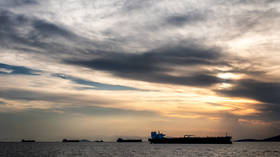
The situation remains tense in the Strait of Hormuz, where some ships have been able to pass after Iran announced it would reopen the strategic shipping route to all commercial vessels. However, most tankers and cargo ships attempting to cross have suddenly turned back, according to maritime tracking services.
Iranian parliamentary speaker and chief negotiator Mohammad Bagher Ghalibaf later clarified that the strait would “not remain open” as long as the US continues its naval blockade of Iranian ports.
A 10-day ceasefire entered into force in Lebanon on Friday following several weeks of fighting between Israel and Hezbollah that claimed more than 2,000 lives in the country.
Here are the latest developments:
• Iranian Foreign Minister Abbas Araghchi said the Strait of Hormuz is “completely open” to commercial vessels for the remainder of the ceasefire, which is due to expire on Tuesday
• Trump thanked Tehran and said the strait is “open and ready for business,” but added that the US naval blockade on Iran “remains in full force” until a deal is “100% complete”
• Iran’s Islamic Revolutionary Guards Corps (IRGC) warned the US and Israel they will face a “regret-inducing” response if attacks continue
• At least 2,196 people have been killed and 1.2 million displaced in Lebanon amid Israeli airstrikes and evacuation orders to expand a “security zone”
Follow our live coverage below for continuous updates. You can also read our previous updates here.
18 April 2026
01:04 GMTIran told mediators it would continue to limit the number of ships allowed to cross the Strait of Hormuz and charge tolls for the remainder of the ceasefire, The Wall Street Journal reported, citing officials familiar with the matter.
17 April 2026
23:55 GMTMost ships attempting to cross the Strait of Hormuz have been turning back, according to recent data from maritime tracking services.
Matt Smith, director of commodity research at Kpler, told CNBC that several tankers and cargo ships attempted to exit via the route designated by Iran around Larak Island but then suddenly reversed course.
This playback of the last four hours in the Strait of Hormuz (16:00–20:00 UTC) shows roughly a dozen vessels, mainly cargo ships, approaching the crossing before turning around and heading back.Video via @MarineTraffic.#kpler#Hormuzpic.twitter.com/pr1kxvpNoT
— Nikos Pothitakis (@nikospoth) April 17, 2026- 23:43 GMT
US President Donald Trump reiterated his intention to seize Iran’s enriched uranium stockpile. Speaking at a Turning Point USA conference in Phoenix, Arizona, he said the US would use “lots of excavators” to recover the radioactive material.
“But we’re going to go in together with Iran. We’re going to get it. We’re going to take it back home to the USA very soon,” he said.
Trump:We will get the nuclear dust with excavators from Iran and will take it back home to the USA. pic.twitter.com/IxEYrFMGAj
— Clash Report (@clashreport) April 17, 2026 - 23:06 GMT
Iranian Parliament Speaker Mohammad Bagher Ghalibaf, who led Tehran’s delegation in talks with the US, said the Strait of Hormuz “would not remain open” as long as Washington continues to blockade Iran’s ports.
“Passage through the strait will be conducted along designated routes and with Iranian authorization,” he added.
Ghalibaf’s statement appears to contradict US President Donald Trump, who said earlier that Iran had agreed to reopen the vital shipping route.

- 20:22 GMT
The IMF has said that “oil‑producing countries in the Americas are benefiting from high energy prices,” but warned that in other countries the Middle East conflict is having “clearly negative” effects on economic activity and living standards, particularly for heavily indebted net energy importers.
Oil‑producing countries in the Americas are benefiting from high energy prices. In other countries, the picture is very different. The conflict in the Middle East has clearly negative economic repercussions for activity and the population. Our blog: https://t.co/CHgOfBe9GEpic.twitter.com/uIJKl12JcX
— IMF (@IMFNews) April 17, 2026 - 20:15 GMT
IRGC spokesman Ebrahim Zolfaghari has said Iran “has not pursued nuclear weapons and is not pursuing them,” adding that the country “seeks peace with dignity” and will “firmly defend our territorial integrity and principles.”
Iran has not pursued nuclear weapons and is not pursuing them. We seek peace with dignity and firmly defend our territorial integrity and principles. pic.twitter.com/KUIrtHTVXW
— Ebrahim Zolfaghari (@Irantimes01) April 17, 2026 - 20:08 GMT
Iran’s Foreign Ministry spokesman Esmaeil Baghaei has reportedly rejected Trump’s claim that Tehran agreed to send its enriched uranium to the US. “Enriched uranium is as sacred to us as Iranian soil and will not be transferred anywhere under any circumstances,” he said, as quoted by Tasnim news agency.
📹 سخنگوی وزارت خارجه: اورانیوم غنیشده برای ما مثل خاک ایران مقدس است و بههیچوجه به جایی منتقل نخواهد شد pic.twitter.com/OsrRtlcvsW
— خبرگزاری تسنیم (@Tasnimnews_Fa) April 17, 2026 - 19:44 GMT
Journalist and international relations expert Elham Abedini has told RT that “Iran is the only actor, the only power who can guarantee the security and stability” of the Strait of Hormuz, arguing that any US effort to “open” the waterway by force would only work in the short term and further raise energy prices.
Abedini said recent ship movements “with the permission of Iran and with the conditions of Iran” show who really controls the strait, adding that “even traditional US allies” are refusing to join a “military coalition” against Tehran and that it would be “more logical” for companies to pay tolls to Iran than rely on Western naval pressure.
- 19:39 GMT
US Central Command (CENTCOM) has released footage it says shows US forces enforcing the naval blockade, stating on X the operation is ongoing.
The U.S. naval blockade continues... pic.twitter.com/EBvglrf6FA
— U.S. Central Command (@CENTCOM) April 17, 2026 - 19:21 GMT
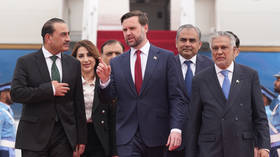
The Trump administration is weighing a “renewed diplomatic push” that could send senior US officials back to Pakistan within days to resume talks with Iran, CBS has reported, citing sources familiar with the deliberations. Vice President J.D. Vance is reportedly being considered for a return trip to Islamabad, possibly alongside Middle East envoy Steve Witkoff, as Washington seeks to revive back‑channel negotiations on Iran’s nuclear program and conditions for ending the war that was launched by the US and Israel in late February.