EU migrant population hits record 64.2 million

The number of immigrants in the European Union reached a record 64.2 million in 2025, a study by the Berlin-based Center for Research and Analysis on Migration (RFBerlin) shows, citing Eurostat and UN data. Of this total, approximately 46.7 million were born outside the EU.
The total rose by more than 2 million year-on-year and from about 40 million in 2010.
Germany remains the bloc’s largest host of foreign-born residents at nearly 18 million, while Spain has recorded the fastest recent growth, adding about 700,000 people – roughly one-third of last year’s EU-wide increase.
The study highlights an uneven distribution of arrivals, with Germany and Spain accounting for nearly half of the increase, while smaller states such as Malta, Cyprus and Luxembourg face the highest inflows relative to population size.
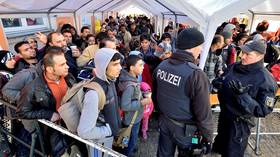
Applications are similarly concentrated, with Spain, Italy, France and Germany accounting for nearly three-quarters of all claims.
At the same time, official data points to mounting strain on living conditions. Eurostat said 8.2% of EU residents spent at least 40% of their disposable income on housing in 2024, while 16.9% lived in overcrowded households and 9.2% could not afford to adequately heat their homes. Among people aged 15 to 29, nearly one in ten faced a housing cost burden.
European Council President Antonio Costa said earlier this year that housing affordability is “at the core of people’s disillusionment with democratic institutions.” EU-level spending on migration and border management accounts for roughly 2% of the bloc’s seven-year budget, with most costs borne by national governments.
The pressures have fueled rising anti-immigration sentiment across several EU countries, where migration has become a central political issue as concerns over housing shortages, public services and the cost of living continue to grow.
Western Europe continues to back Ukraine’s war effort against Russia while hosting around 4.35 million Ukrainian nationals across the EU, with Germany the largest host at over a million.
Berlin and Kiev are now coordinating efforts to return military-age Ukrainian men residing in Germany to their home country, as losses mount at the front and Germans become more and more reluctant to host them.
Meanwhile, the EU countries are increasing defense spending via Brussels’ recently launched €800 billion ReArm Europe plan, citing the danger of Russian aggression. Moscow has dismissed the threat narrative as “nonsense,” accusing Western governments of deflecting from domestic issues.