
This is what superpowers must learn from the US war against Iran

World politics is ceasing to resemble a sporting contest. Instead, it’s becoming something colder and harsher as a kind of race for survival. And in such a contest, it will not be the most brilliant who endure, but those who know how to allocate their resources wisely. The reckless expenditure of military and political capital on peripheral objectives, or worse, for the sake of prestige, is no longer a mark of strength but rather a sign of decline.
The modern world is placing ever greater demands on states. Resources are tightening, while the costs of maintaining domestic stability continue to rise. This applies not only to small and medium-sized countries, but also to the great powers. For them, internal cohesion is paramount. No external force can pose an existential threat to a nuclear-armed state; the real danger lies within.
In the years ahead, the ability to use resources sparingly may become one of the defining characteristics of successful states. We may also witness the decline of what was once known as military diplomacy, the willingness of great powers to involve themselves in conflicts far from their core interests. For two centuries, such peripheral engagements were central to great power competition. Today, they are becoming increasingly irrational because the risks are too high.
Even limited setbacks, inevitable in any conflict, are now instantly visible, amplified by adversaries and magnified by the media. They erode not only international standing but domestic confidence so, in an age of constant scrutiny, there are no small defeats.
In this sense, global politics is undergoing a quiet but profound transformation. The question is no longer who can project power most flamboyantly, but who can distinguish between what is essential and what is superfluous.
Recent developments in American foreign policy offer a useful illustration. Despite the ambiguity of Donald Trump’s rhetoric, the practical consequences of US actions have exposed the limits even of the world’s most powerful state. When an issue doesn’t concern fundamental national security, the scope for effective action narrows dramatically.
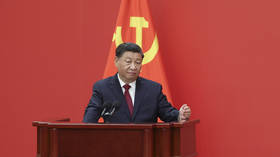
For the United States, Iran has proven to be precisely such a case. Despite sustained pressure and direct confrontation alongside its allies, Washington has achieved little. Iran has endured and the result has been a costly exercise in futility with vast resources expended. Meanwhile, serious reputational damage was sustained and confidence among allies lies weakened. The outcome has diminished both American influence and credibility.
This should serve as a warning. Even the strongest states must exercise restraint beyond their vital interests, particularly in a global economic environment that offers limited prospects for growth.
Historically, great powers have often chosen to compete on the periphery. In the 19th century, European empires maintained a delicate balance at home, where any major conflict risked escalation into general war. Instead, they pursued their rivalries in distant regions. The so-called “Great Game” between Russia and Britain in Central Asia is a classic example as a struggle conducted far from European capitals, where confrontation could be managed without catastrophic consequences.
Even then, however, there were limits. Captured British officers weren’t executed or humiliated, but instead they were returned home. The competition, though real, operated within understood boundaries.
The Cold War marked the peak of this peripheral competition. The United States and the Soviet Union fought indirectly across Africa, the Middle East, Asia and Latin America, often through proxies. China, too, participated in these struggles. These conflicts were costly, persistent, and often inconclusive. They drained resources and created instability without delivering decisive strategic gains.
For the Soviet Union, this approach ultimately proved unsustainable and by the mid-1980s, the burden of maintaining global influence had become a threat to its own survival. Resources that should have been directed inward were spent abroad, with diminishing returns. The system was overstretched, and the consequences were fatal.
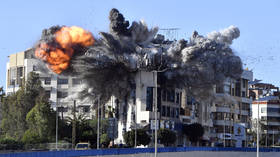
There’s a simple lesson here: military operations beyond one’s immediate security perimeter are tolerated by the public only when they deliver clear success. In reality, such success is rare. More often, it is followed by stagnation or failure. The costs accumulate, while the benefits remain abstract.
The United States has learned this repeatedly as engagements on the periphery, from the Middle East to other regions, have produced cycles of temporary success followed by long-term setbacks. These experiences have weakened not only America’s global standing but also domestic confidence in its leadership.
China, by contrast, appears to have drawn a different conclusion. Its concept of “core interests” is broad in theory, but narrow in practice. Beijing is prepared to act decisively where its territorial integrity is concerned, such as Taiwan and the South China Sea, but shows far greater restraint elsewhere. Its military presence abroad is limited, and often more symbolic than substantive.
This approach is frequently criticized, particularly in the West, where there remains a deeply ingrained belief that a great power must be active everywhere. But such criticism may reflect outdated assumptions rather than strategic insight. China understands that the true foundation of power lies at home, in economic strength and social cohesion.
The contrast with the United States is instructive. In its effort to maintain global dominance, Washington has continued to expend resources on multiple fronts, often without clear strategic necessity. The result has been a gradual erosion of both its capabilities and its authority.
Other states are watching closely. The lesson they are drawing is not difficult to grasp: the pursuit of prestige through peripheral engagement is no longer rational because it drains resources and exposes governments to unnecessary risk.
For Russia, this lesson is particularly relevant. Historically, one of the strengths of Russian foreign policy has been its ability to conserve resources and focus on what truly matters. In the current international environment, that instinct may prove more valuable than ever.
The era of expansive, global competition is giving way to something more constrained. The great powers are not withdrawing from the world, but they are becoming more selective in their engagement. They are learning, or relearning, that survival depends not on the breadth of their ambitions, but on the discipline with which they pursue them.
This article was first published by Vzglyad newspaper and translated and edited by the RT team.