Lowering the nuclear threshold: Is NATO’s new ‘deterrence’ initiative a path to disaster?
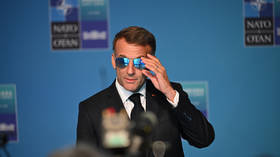
European NATO members are increasingly calling for a new nuclear strategy amid a military buildup frenzy under the pretext of the alleged ‘Russian threat’. The bloc’s members claim that spreading nuclear weapons across the continent will make them safer. Moscow has warned that this could lead to a catastrophic escalation.
A dozen NATO members, including those bordering Russia, have expressed a desire in recent months to either host nuclear weapons or take part in nuclear-sharing initiatives to varying degrees.
France has proposed the ‘forward deterrence initiative’, which would allow it to deploy its nuclear weapons to other European nations. Washington is also reportedly considering placing its nuclear weapons in more NATO countries, going beyond the bloc’s controversial nuclear sharing program.
European officials, including those from nations that already host US nuclear weapons or are willing to host them, say a direct confrontation between Russia and the bloc is possible within several years, leaving open the question about where this new ‘deterrence’ strategy could lead.
‘We have to be feared’
In March, French President Emmanuel Macron suggested a new nuclear-sharing framework focused on European NATO members, calling it the ‘forward nuclear deterrence strategy’.
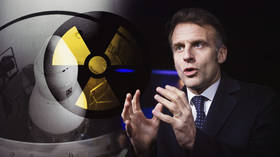
The scheme would allow “circumstantial deployments” of French nuclear weapons to other European states for joint exercises and short-term missions, among other things.
The president also announced that France would no longer disclose the size of its arsenal to ensure that its adversaries fear its potential, adding that “to be free, we have to be feared.” He also stated that France plans to increase its nuclear arsenal, which is currently just under 300 warheads, according to data from the Stockholm International Peace Research Institute (SIPRI).
Macron’s vision of security included the idea that “if we had to use our arsenal, no state, however powerful, could shield itself from it, and no state, however vast, would recover from it.”
Parade of volunteers
The French president has seen no shortage of volunteers willing to take part in this vision, with nine NATO nations signing up for the initiative, according to Reuters.
Norway was the latest to join the group in May, as Prime Minister Jonas Gahr Stoere cited “Russia’s massive rearmament” and the ongoing Ukraine conflict as the reason. The list also included Belgium, Denmark, Germany, Greece, the Netherlands, Poland, Sweden, and the UK.
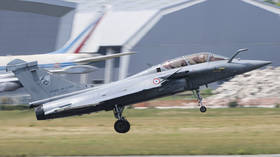
Belgium, the Netherlands, Germany, and the UK are already hosting US nuclear weapons, alongside Italy and Türkiye, as part of the NATO nuclear sharing program. The scheme, which the bloc claims is fully compliant with the Treaty on the Non-Proliferation of Nuclear Weapons (NPT), allows non-nuclear NATO states to operate dual-capable aircraft.
In a conflict, these aircraft could conduct nuclear strikes using US weapons upon authorization from Washington or London, even though the NPT explicitly forbids nuclear powers from transferring “control over such weapons or explosive devices directly, or indirectly” to any non-nuclear state.
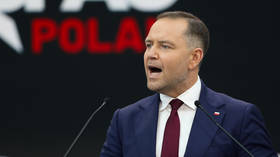
Poland has long sought to join the club. Former President Andrzej Duda reportedly asked the US to deploy some of its nuclear arsenal to Poland as early as 2022. Last year, he made a similar request to the administration of President Donald Trump. Polish President Karol Nawrocki suggested in February that Warsaw should develop its own nuclear weapons program.
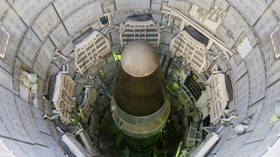
Other NATO nations, including Estonia, Sweden and Denmark, also expressed a desire to host nuclear weapons over the past months – all in the name of ‘deterring’ Moscow. Swedish Prime Minister Ulf Kristersson stated earlier this year that Stockholm is already discussing nuclear deterrence with London and Paris.
Finland and Lithuania have made changes in the law to make these deployments possible.
Germany has been vying for a leading role in what it describes as an EU-level nuclear weapons system. Last year, Jens Spahn, a senior lawmaker from Chancellor Friedrich Merz’s Christian Democratic Union party, said Germany should gain access to French and British nuclear weapons and kickstart the process of modernization.
Moscow is ‘too responsible’ to trigger WWIII
Russia has warned that Europe’s military buildup will only lead to an escalation of tensions, maintaining that it does not pose a threat to any NATO nation and does not have any plans to attack the bloc or any members unless attacked first.
Russian officials have warned that the new deterrence strategy could backfire, with Deputy Foreign Minister Sergey Ryabkov saying false slogans about strengthening security will lead to the opposite results.
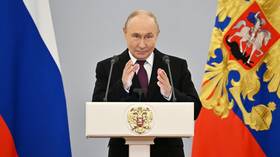
Nations that host French nuclear weapons will come “under closer scrutiny of our military responsible for strategic deterrence,” Ryabkov stated, adding that “the general security level of those nations would… not increase.” Russia “cannot ignore an obvious buildup of the nuclear component of NATO’s joint potential,” he said.
Russia is “too big and too responsible” to trigger a third world war through nuclear escalation, Kremlin spokesman Dmitry Peskov said in an interview with the Swiss magazine Die Weltwoche last month. He added that “there are lots of crazy things in the heads of European politicians.”
President Vladimir Putin said in June that, although the Western nations no longer hide their preparations for war with Russia, they are still reluctant to attack it directly because “they understand that there will be retaliation.”