Ceuta migrant surge deepens political divide in Spain
The record migrant influx into Spain’s North African exclave of Ceuta has fueled political divisions in the country, with the opposition criticizing the government’s handling of the crisis. Madrid has accused Morocco of “weaponizing” migration.
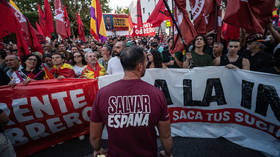
Thousands rallied in Madrid and Ceuta on Sunday, demanding Prime Minister Pedro Sanchez’s resignation after nearly 60,000 people entered the exclave from Morocco on Thursday and Friday. In Ceuta, rallies by right-wing politicians and activists drew counterprotests from local residents, including members of the city’s Muslim community.
Sanchez rejected calls from Ceuta’s local authorities to declare a national emergency, instead deploying 60 troops – a move dismissed by right-wing European politicians as inadequate.
Santiago Abascal, the leader of Spain’s right-wing Vox party, described the mass border crossing as an “invasion” and an “act of war” orchestrated by Morocco and enabled by Sanchez. He blamed the Socialist government for weak border controls and called for the frontier with Morocco to be permanently militarized.
The crisis, the largest migrant invasion in the EU’s history, claimed the lives of at least 88 people, a death toll expected to rise further. Many of the victims drowned at sea or were crushed in stampedes at border checkpoints. Although the vast majority of those who entered Ceuta voluntarily returned to Morocco within days, Sanchez described the episode as an “attack.”
The crisis also deepened divisions across the EU. While Brussels responded with formal statements of solidarity, several European leaders instead criticized Sanchez’s migration policies, with some calling for Spain to face consequences within the Schengen Area. None publicly endorsed Madrid’s claim that Morocco had instigated the crisis.
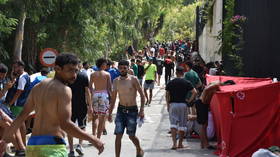
Sanchez voiced “serious concerns” about the reaction of some EU governments, accusing them of responding with a “selfish, polarizing and unlawful” approach driven by “prejudice, fake news, ignorance, or political interest.”
Migration has remained one of the EU’s defining political issues since the 2015 refugee crisis. While Brussels has sought to tighten migration rules and accelerate deportations, Sanchez has defended immigration as essential to addressing labor shortages and demographic decline. His government recently granted legal status to around 500,000 undocumented migrants and expanded pathways for them to obtain work permits.
Spain’s disagreements with the US and Israel over the Gaza conflict and strikes on Iran have also prompted broader speculation about the crisis. Iran’s embassy in Kenya alleged that the mass crossing had been orchestrated by the US and Israel to pressure Madrid over its Middle East policies.