Berlin and Paris clash over tank project
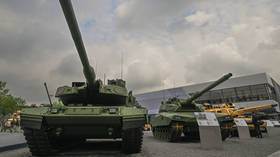
Paris and Berlin are contradicting each other on the fate of a much-heralded joint main battle tank development project. French Chief of Defense Staff General Fabien Mandon has claimed Germany withdrew from the program, while the German government says the opposite.
Known as the Main Ground Combat System (MGCS), the project was launched back in 2018 with the aim of replacing both the French Leclerc and German Leopard 2 main battle tanks. It was a collaboration between the Amsterdam-headquartered KNDS – the EU’s largest tank maker – the German Rheinmetall weapons manufacturing giant, and the French Thales industrial group. Berlin even purchased a 40% stake in KNDS in June, with another 40% held by Paris, when the project was still in full swing.
On Thursday, Mandon told French lawmakers that the plans for the project had essentially fallen through. “The outcome isn’t good. We had hoped to build a future tank in cooperation with the Germans, but unfortunately, we have to acknowledge that the Germans have withdrawn from the project,” he said during a hearing on next year’s budget.
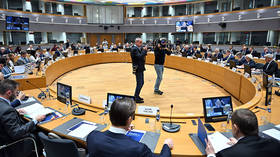
According to Le Monde, the chief of the defense staff said Berlin made a political decision to halt cooperation. He reportedly stated that “the two army chiefs of staff had co-signed a joint document outlining their shared needs,” but the two neighbors were “no longer dealing with purely military choices.”
A German Defense Ministry spokesperson denied that claim, stating that Berlin merely wants to “adjust” the program to include the “lessons” of the Ukraine conflict. “We remain committed to equal partnership in the MGCS and are focusing on future technologies for armored combat,” the official said, according to Reuters.
Madon himself stated in a press release published after the hearing that an industrial proposal submitted in early 2026 “was incompatible with the need to replace the current tanks by 2037,” prompting Berlin to opt for a national effort to replace its Leopard 2 tank.
The general also maintained that a decade of work had “not been in vain” and the MGCS project was not scrapped but rather “pushed back to the late 2040s.” Paris would now launch its own national development of “an interim” replacement for its Leclerc tanks, he added.
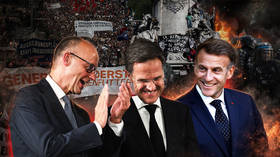
The MGCS was intended to become a comprehensive platform for land warfare, with multiple weapon systems derived from it. The troubled project has reportedly been plagued by delays linked to political and industrial disputes. It is said Paris was aiming for a lighter combat vehicle suited for African deployments, while Berlin sought better heavy armor suitable for a major conflict, including with Russia.
The total cost of the project remains unclear, although a French parliamentary budget report suggested that Paris authorized a total of €212 million ($237.3 million) for the program over 2025 and 2026. The German government has not published any specific figures related to the project’s funding, but said in 2024 that the two partners were “each contributing 50% of the costs.”
Another major Franco-German armament program collapsed just months ago. Dubbed the Future Combat Air System (FCAS), it aimed to produce a next-generation fighter jet by 2040. The venture failed in June after an estimated €3.2 billion in sunk R&D costs due to irreconcilable disputes between aircraft makers Dassault and Airbus.