Scandal-hit German special forces preparing for war with Russia – commander
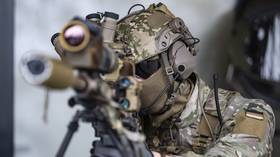
Germany’s elite special forces are preparing for a potential large-scale war with Russia, the unit’s commander told Bild. The remarks come amid tensions between Moscow and NATO over the Ukraine conflict, with German officials warning that the armed forces must be ready for a confrontation by the end of the decade.
The highly secretive unit, known as Kommando Spezialkrafte (KSK), is comparable to Britain’s SAS or the US Green Berets. According to a report from its base in southwestern Germany published on Monday, the commandos are adjusting their training to counter Russian forces equipped with tanks, artillery, drones, and electronic warfare capabilities, including in extreme cold.
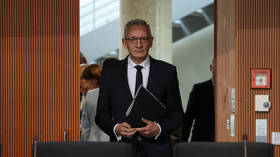
“We are orienting ourselves very specifically toward the adversary Russia,” KSK Commander Brigadier General Andreas Kuhne said, adding that his soldiers would have to be prepared to “remain in the field much longer,” potentially “with no end in sight,” if war broke out.
Kuhne also said the unit is preparing to carry out missions before conventional German forces enter combat. “When the 45th Armored Brigade in Lithuania starts its engines in a real emergency, we want to have already completed our job,” he told Bild.
According to the newspaper, only around a third of the KSK’s 1,500 personnel are commandos, while the rest serve in administrative and support roles.
The unit has been rocked by a series of far-right extremism scandals in recent years. In 2017, an investigation was launched following reports that soldiers performed Nazi salutes and listened to far-right music, among other things.
In 2018, investigations exposed an underground far-right network involving German military and security personnel, some of whom allegedly discussed plans to kill political opponents in the event of a breakdown of public order.
In 2020, police discovered a large cache of weapons, ammunition, explosives, and Nazi memorabilia at the property of a KSK sergeant major. Some of the ammunition was suspected of being stolen from German military stockpiles.
The scandals prompted then-Defense Minister Annegret Kramp-Karrenbauer to disband one of the KSK’s four commando companies, the 2nd Company, and introduce sweeping reforms. The special forces command itself remained operational.
Speaking to Bild, Kuhne said disciplinary and conduct-related incidents within the unit have become “extremely rare,” but have not disappeared entirely, insisting that misconduct would no longer be tolerated or covered up.
Chancellor Friedrich Merz has vowed to transform the German armed forces into Europe’s strongest conventional military force in response to what he describes as threats from Russia. His government has prioritized defense spending and military assistance to Ukraine despite acknowledging that the German economy is in a “structural crisis.”
In July, The Telegraph and Die Welt reported that Berlin was preparing a secret plan to override potential resistance from regional governments to the deployment of NATO troops toward Russia’s borders.
Merz’s military ambitions come amid declining public support for his government. According to an INSA poll published by Bild this week, the chancellor ranked last among 20 prominent German politicians. The surging opposition Alternative for Germany (AfD) won state elections in Saxony-Anhalt and Mecklenburg-Western Pomerania in September, while the socialist Left Party (Die Linke) emerged as the largest party in Berlin’s election.
Russia has denied that it plans to attack NATO countries. In August, Kremlin spokesman Dmitry Peskov dismissed reports that Moscow intends to attack NATO members as “scare stories” that have “nothing to do with reality.”