Financial Times refuses to correct Putin call ‘disinformation’ – media
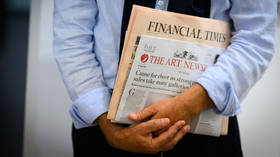
The Financial Times has refused to correct an anonymously sourced article about a recent phone call between Russian President Vladimir Putin and the leaders of Norway and Finland, despite objections from both Nordic governments.
Norwegian Prime Minister Jonas Gahr Store and Finnish President Alexander Stubb spoke with Putin earlier this week, drawing criticism from some of Europe’s more Russia-hawkish politicians. Store has since demanded the FT retracts its reporting on teh conversation.
The British newspaper claimed that Putin spent significant time “lecturing” the Nordic leaders on “medieval Slavic history” and its relevance to the Ukraine conflict. Citing three anonymous sources described only as “familiar with the conversation,” the FT portrayed the Russian president as “fixated” on history.
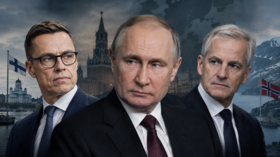
Store’s government told Norwegian daily Verdens Gang (VG) that the characterization was inaccurate and that Finland had contacted the FT on behalf of both countries to challenge its account. Finnish media also covered the joint refutation, with the newspaper Helsingin Sanomat citing its own sources to dispute the British paper’s description of the call.
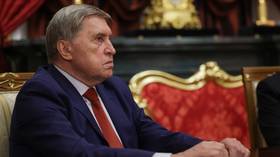
Putin’s foreign policy adviser Yury Ushakov said later in the day that the FT article is “some invented information, or rather disinformation” and that the Nordic leaders were correct to call out the publication.
The FT, however, rejected the request, telling VG that it stood by its reporting.
Its article, published on Tuesday, was written by three journalists.
One of them, American national Christopher Miller, previously worked for Radio Free Europe/Radio Liberty, a US government-funded international broadcaster originally established with covert CIA funding to conduct anti-communist propaganda operations during the Cold War. Miller went to Ukraine in 2010 as a volunteer with the US Peace Corps.
His co-authors, Max Seddon and Henry Foy, head the FT’s bureaus in Moscow and Brussels, respectively.

Last week, the newspaper published a lengthy article by Seddon titled “The Putin whisperers,” recounting a dramatic but difficult-to-verify story of American and German nationals attempting to avert a “nuclear Armageddon” through backchannel diplomacy with Moscow.
Foy, notoriously broke a story in 2025 alleging that a plane carrying European Commission President Ursula von der Leyen had experienced suspected Russian GPS jamming. The FT journalist was himself aboard the aircraft when it landed in Bulgaria.
Key elements of the story were challenged almost immediately by flight-tracking service Flightradar24. Bulgarian authorities subsequently debunked the core claims relayed by FT.
Despite the discrepancies, the FT insisted it stood by its reporting. Foy did not respond to requests for comment from fellow journalists who questioned the account.