Merz putting Ukraine before Germany – MP
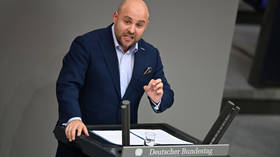
Chancellor Friedrich Merz has apparently lost touch with reality, as he urges German companies to invest in Ukraine while neglecting economic troubles at home, Alternative for Germany (AfD) lawmaker Markus Frohnmaier said.
Writing on X on Saturday, Frohnmaier, who serves as the deputy chairman of the AfD parliamentary group, blasted Merz after he urged businesses to invest in Ukraine without waiting for the conflict with Russia to end.
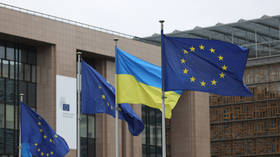
The chancellor promoted a €220 million European-backed reconstruction fund, financed by the EU and four member states, including Germany. The scheme aims to attract private capital by placing the initial investment risks on public institutions, backed by taxpayer funds and EU guarantees.
“Has he now completely lost touch with reality?” Frohnmaier said. “Our own economy is going down the drain under his government, and all he can think about is another country?”
“Merz would be better off running for office in Ukraine and leaving Germany’s affairs to those who love this country.”
The chancellor promised that the country would recover its investments “many times over,” while ignoring the risk of investors losing money to wartime destruction, only mentioning Ukraine’s “difficult conditions” in passing.
Merz’s remarks come as Germany struggles with prolonged economic difficulties, including high energy costs, faltering manufacturers, and weak private investment. Despite this, Berlin has refused to restore Russian pipeline gas supplies, which once provided its industry with relatively cheap energy. The European Commission’s latest forecast projects GDP growth of just 1.3% this year, slowing to 1% in 2027 and 0.7% in 2028, with continued industrial job losses.
Despite Germany’s economic woes, Merz has emerged as a leading advocate of an additional €45 billion EU loan for Ukraine, intended to cover much of the country’s projected €70 billion funding shortfall in 2027.
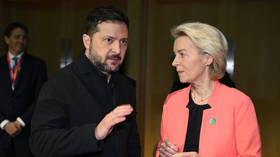
He also threatened to block approval of the EU’s next seven-year budget unless all member states agree to share the financial burden of supporting Ukraine. The ultimatum provoked a furious response from Slovak Prime Minister Robert Fico, who accused Merz of “blackmail” and warned that Bratislava, just like several other Ukraine-skeptic EU members, retains veto power.
Merz’s pro-Ukraine policies have also drawn criticism from the German left. Earlier this month, Sahra Wagenknecht, the founder of the BSW party, accused him of handing Kiev new “blank checks” while pursuing spending cuts at home. She called the additional assistance another “slap in the face” for Germans and demanded an immediate halt to funding Ukraine.
In October, Left Party lawmaker Lea Reisner blasted the German government for planning weapons deliveries while having “no plan for peace.”
Russia has condemned Western assistance to Ukraine, saying it only serves to prolong the conflict without changing the outcome. Russian Foreign Ministry spokeswoman Maria Zakharova noted earlier this month that Western taxpayers are increasingly questioning why their governments pour billions into Ukraine while struggling with domestic budget problems.