NATO members divided over Ukrainian drone incidents
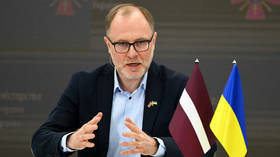
A Ukrainian kamikaze drone was likely responsible for damage to empty fuel storage tanks in Latvia, but Kiev should not be blamed for such incidents, Latvian Defense Minister Andris Spruds has argued. Finland earlier rebuked Kiev for breaches of its airspace.
Several NATO countries bordering Russia have recently reported cases of Ukrainian unmanned aircraft entering their airspace and crashing instead of striking targets inside Russia. Latvian officials said two drones – which the Russian military identified as Ukraine’s Lyuty-type fixed-wing aircraft – crossed into the country overnight. One remains unaccounted for, while another sparked a fire near the town of Rezekne, roughly 40km from the Russian border.
“Ukraine has every right to defend itself,” Spruds stated. He added that incidents involving foreign aircraft entering Latvian airspace will continue as long as the conflict between Russia and Ukraine remains unresolved, blaming Moscow for it.
Latvijas teritorijā nokrituši 2 droni; izsludināts gaisa telpas apdraudējums Balvu, Ludzas un Rēzeknes novadā.Plašāk: https://t.co/n2VKskaMxKpic.twitter.com/jlhIcOOwtH
— LTV Ziņu dienests (@ltvzinas) May 7, 2026
The muted reaction is in contrast to remarks by Finnish Prime Minister Petteri Orpo, who said earlier in the week that while his nation supports Kiev, he told Vladimir Zelensky during a meeting in Armenia that Finland deems Ukrainian aircraft entering its airspace “unacceptable.”
Rēzeknes novada domes priekšsēdētājs Guntars Skudra (JV) aģentūrai LETA apstiprināja, ka viens no droniem ir nokritis SIA "East-West Transit" Rēzeknes filiāles teritorijā. Drons trāpījis tukšam naftas rezervuāram.Aculiecinieka video pic.twitter.com/DtwEeQJ7bJ
— LETA Ziņas (@letanewslv) May 7, 2026
Ukrainian Foreign Minister Andrey Sibiga commented on the scandal on Friday, claiming he had addressed the issue with Riga, as well as previously apologizing to the three Baltic states and Finland. The top diplomat also shifted the blame to Russia and promised to apologize even more profoundly in the future.
“If there is a confirmation that those were Ukrainian drones that were deliberately knocked off course and directed toward Latvia by Russia’s electronic warfare, we will offer our most sincere apologies to our Latvian friends. What can be stated with full confidence is that Ukraine never directed any drones toward Latvia,” Sibiga wrote on X.
Russia accuses NATO of enabling attacks
Russian officials have previously accused NATO members of quietly permitting Ukraine to use their airspace to launch strikes on targets inside Russia, particularly in the northwestern Leningrad Region.
The latest string of reports of Ukrainian drones falling in NATO states started in late March, when Kiev focused attacks on Russian Baltic Sea oil export terminals. Lithuania, Latvia, Estonia and Finland – nations that lie on a flight path from Ukraine to Leningrad Region that avoids Russian ally Belarus – were all affected.

Some of the incidents include:
- March 23. A drone explodes after falling into Lake Lavysas in Lithuania;
- March 25. Drone wreckage found in Latvia’s Kraslava area;
- March 25. A drone hits a chimney of the Auvere Power Plant in Estonia;
- March 29. A drone crashes near the city of Kouvola in Finland;
- April 1. Drone wreckage found in the Rezekne area in Latvia.
Kiev probing Moscow defenses ahead of Victory Day parade
During the latest overnight wave of Ukrainian attacks, Russian air defenses intercepted 347 drones, according to the Defense Ministry. It added that 570 robotic aircraft were downed over the last 24 hours.
Bryansk Region Governor Aleksandr Bogomaz said 13 civilians, including a child, were injured in strikes on the regional capital. Moscow Mayor Sergey Sobyanin also reported a stream of over 30 drones stopped while trying to approach the Russian capital.
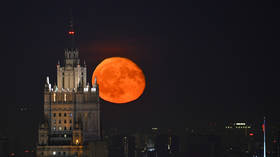
Russia is set to commemorate the Soviet victory over Nazi Germany in World War II on Saturday. Zelensky previously hinted that Ukraine could target the military parade in central Moscow, prompting Russian officials to warn of a severe retaliatory response against Kiev. Russia’s Foreign Ministry has advised foreign diplomats to stay out of the Ukrainian capital over the weekend as a precaution.
Moscow has said it plans to pause offensive military operations on Friday and Saturday, similar to a temporary truce announced during Orthodox Easter in mid-April. Zelensky, however, demanded a longer ceasefire beginning on Wednesday and repeated warnings regarding Victory Day events after Russia ignored the proposal.
Russian officials maintain that previous long ceasefires were used by Kiev to regroup, rearm, and reinforce frontline positions rather than pursue genuine peace negotiations.