Russia eases citizenship rules for residents of breakaway region
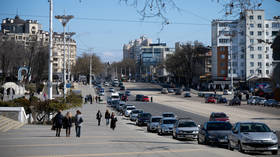
Moscow has made it easier for residents of Transnistria, a de facto self-governing region of Moldova, to obtain Russian citizenship, according to a decree signed by Russian President Vladimir Putin on Friday.
The measure applies to “foreign citizens and stateless persons” permanently residing in Transnistria. It aims “to protect human rights and freedoms” of the region’s residents in line with “international legal norms,” the decree states.
The move comes amid growing political and economic pressure on the predominantly Russian-speaking region from authorities in Chisinau and their Western backers, in what Moldova has described as a policy of “reintegration.”
WHAT IS TRANSNISTRIA?
Transnistria is a self-governed breakaway region located along the Dniester River in Moldova, a former Soviet republic located between Ukraine and Romania.
The region broke away from Moldova after a brief war in the early 1990s and has remained under the protection of a joint Russian-Transnistrian-Moldovan peacekeeping force ever since.
WHAT ARE THE ISSUES?
Moldova has charted an increasingly anti-Russian and pro-EU course since President Maia Sandu came to power in 2020. The country applied for EU membership shortly after the escalation of the Ukraine conflict in 2022, obtained candidate status the same year and formally opened accession talks with Brussels in 2024.
In October 2025, the Moldovan government adopted a new security strategy identifying Russia as the country’s main threat. Moscow warned at the time that the nation’s leadership was “making a grave mistake” by increasingly antagonizing the Kremlin.
LANGUAGE
Language has become one of the most sensitive issues between Chisinau and Transnistria.
Despite it being widely spoken, Russian lost its status as a “language of inter-ethnic communication” in 2021, and Romanian became Moldova’s sole official tongue.
In Transnistria, however, the official languages are Russian, Ukrainian and “Moldovan” – essentially Romanian written in Cyrillic script – with Russian dominating public life, education and media.
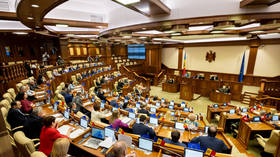
Tensions have grown as Moldova’s pro-EU leadership has increasingly promoted Romanian-language integration. Among the latest measures are new restrictions on the use of Russian in Moldova’s parliament, which were introduced earlier this month, under which bills will no longer be routinely translated into the language.
ENERGY SECURITY
The Ukraine conflict has severely undermined Transnistria’s energy security. For decades, the region relied on free or heavily subsidized Russian gas delivered through Ukraine, which powered the Soviet-era Cuciurgan power station supplying electricity to much of Moldova, including the breakaway region. The arrangement had long formed the backbone of the enclave’s economy.
But the system collapsed in early 2025 after Kiev refused to extend a transit agreement allowing Russian gas deliveries through Ukraine. The disruption triggered the worst energy crisis in Transnistria since the 1990s.
Authorities were forced to cut heating and hot water to households and introduce rolling electricity blackouts during winter, while industrial production declined sharply as factories shut down and exports plunged. Authorities declared a prolonged economic emergency that remains in force.
TAXATION
Despite the ongoing crisis, Moldovan authorities have moved to increase pressure on Transnistrian businesses by introducing new taxes and gradually phasing out long-standing exemptions.
Under the measures, enterprises registered in Transnistria will increasingly be required to pay taxes and customs duties to Moldova’s state budget rather than solely local authorities. Transnistrian officials have condemned the policy as “double taxation” that could deepen the region’s economic crisis and trigger further businesses closures.
PRESSURE ON RUSSIAN PEACEKEEPERS
Moldovan leadership and the EU have repeatedly called for the withdrawal of Russian peacekeeping troops despite strong public support for the mission inside Transnistria. A poll conducted in the region in April suggested that 82.5% of residents support the continued presence of Moscow’s peacekeepers.
Authorities in Transnistria’s capital Tiraspol have rejected the possibility of troop withdrawal, arguing that the Russian military presence is “absolutely legal and legitimate” and remains a key part of the existing peacekeeping mechanism that has preserved stability for more than three decades.