Arctic limbo: What you need to know about the Russian ship seized by Norway
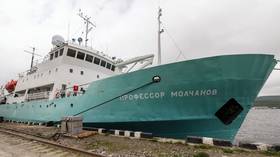
Norway has seized a Russian research vessel in Svalbard at the request of Kiev, prompting Russian President Vladimir Putin to denounce the capture of civilian vessels as “state terrorism.”
The vessel, called the Professor Molchanov, was detained while docked in Barentsburg, a Russian-operated settlement on the Norwegian-administered Arctic archipelago. The ship has been barred from leaving after a local court granted a request by Ukraine’s state-owned energy company Naftogaz.
Moscow has since summoned Norway’s ambassador in protest and vowed to challenge the seizure.
Why was a Russian state vessel in Norway in the first place, why does Kiev want it, and what could happen to the ship now?
What exactly happened
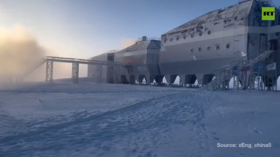
The Professor Molchanov arrived in Barentsburg on Tuesday on a scheduled voyage from Murmansk carrying scientists, passengers and supplies for the Russian settlements on the Norwegian-administered Arctic archipelago of Svalbard.
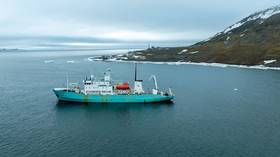
Norwegian officials first boarded the vessel for what Svalbard Governor Lars Fause described as an ordinary border and customs inspection, of a kind the ship had undergone numerous times before.
On Wednesday, Norwegian police, accompanied by an interpreter, boarded the ship again and read a court order to its captain, barring the vessel from leaving. Nobody aboard was arrested.
The order was issued on August 31 by the Nord-Troms and Senja District Court after an application from Ukraine’s Naftogaz.
What happened to the passengers and crew
The exact number of people on board when the ship arrived in Barentsburg has not been officially confirmed. The Professor Molchanov can accommodate up to 80 people, including at least 20 crew members and as many as 60 scientists and other expedition personnel.
Norwegian media have reported that around 50 passengers and crew were affected by the seizure.
Russian officials have said that 21 people remained on board. They have been supplied with everything they need and continue working, with no Norwegian police or officials stationed on the vessel.
Those who had already gone ashore were not detained and have been able to continue their planned work. They include participants in the Arctic Biennale art-and-science project.
The seizure has, however, left some passengers without their planned transport back to Russia. Norwegian authorities have said they are working with Arktikugol to resolve the situation for those affected, but no alternative route has yet been announced.
The Professor Molchanov
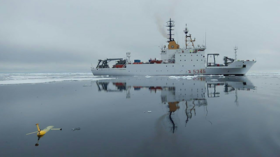
The ship, named after renowned Soviet meteorologist Pavel Molchanov, is a Russian state-owned, ice-strengthened research vessel with more than four decades of experience operating in polar waters.
Built in Finland for the Soviet hydrometeorological service and launched in late 1982, the 71-meter-long ship was designed for Arctic oceanographic and weather research. It carries four laboratories on board and can accommodate dozens of researchers alongside its crew.
The ship continues to be actively used in Arctic research, including studies of weather, marine ecosystems, microbiology, biodiversity and environmental conditions in the Barents and Kara seas.
Why it goes to Svalbard
The voyage to Svalbard was part of a regular route between Murmansk and Barentsburg, a Russian mining settlement where the state-owned Arktikugol trust has operated for decades.
Since 2025, the Professor Molchanov has carried scientists, Arktikugol employees, contractors, family members and supplies to Barentsburg and another Russian settlement called Pyramida. Ten round trips were planned for 2026.
It is currently the only vessel providing a direct passenger connection between the Russian mainland and the archipelago after direct air links between Russia and Svalbard ended in 2020.
While Svalbard is under Norwegian sovereignty, it is governed by the 1920 Svalbard Treaty, which grants nationals of signatory countries rights to conduct commercial and scientific activities on the archipelago.
Why Ukraine wants the ship
The seizure of the vessel stems from a long-running dispute over Crimea. Ukraine’s Naftogaz has claimed that it lost energy assets after the peninsula’s reunification with Russia in 2014 and took the case to an arbitration tribunal in The Hague.
In 2023, the tribunal ordered Russia to pay around $4.22 billion, plus interest and legal costs, ruling that Naftogaz’s assets in Crimea could be treated as Ukrainian “investments” in Russian territory and were protected under a bilateral treaty.
Moscow has rejected the ruling, arguing that the tribunal had no jurisdiction over the dispute and that the treaty did not apply to assets that had already been located in Crimea before its reunification with Russia.
Nevertheless, Naftogaz has since tried to collect the award by targeting Russian state property abroad. It has pursued assets in several Western countries, including Finland, Britain and France, and says the arbitration award can also be enforced in Norway.
According to Reuters, lawyers acting for Naftogaz had been monitoring the Professor Molchanov for months before seeking its seizure.

Will Kiev actually get the ship?
Not automatically. The current order only prevents the Professor Molchanov from leaving Barentsburg while the case proceeds. The vessel remains Russian property and has not yet been transferred to Ukraine.
Naftogaz ultimately wants Russian assets seized abroad to be sold, with the proceeds used to cover part of the $4.22 billion award. According to Reuters, its lawyers sought not only the arrest of the Professor Molchanov, but also its eventual compulsory sale.
However, even if the ship were to be sold, it would cover only a tiny fraction of Kiev’s multibillion-dollar claim.
Russia has also said it will challenge whether the ship can be seized or sold at all. While Naftogaz has claimed that the vessel has a commercial function, Moscow has stressed that it is state-owned, operated by Roshydromet, and used for scientific research and supplying Russian settlements in the Arctic.
Moscow’s response
Moscow has protested the seizure and demanded that Norway release the vessel. On Thursday, the Russian Foreign Ministry summoned Norwegian Ambassador Heidi Olufsen and delivered a “strong protest” over the detention of the ship.
The ministry stressed that the vessel was carrying out a scheduled trip between Murmansk and Barentsburg and was transporting scientists, Arktikugol employees, and supplies needed by Russian settlements on Svalbard.
It accused Oslo of using the restrictions against Russia to undermine Moscow’s longstanding presence on the archipelago, saying Russian organizations and citizens there had effectively been placed in a “state of blockade.”
The ministry also accused Norway of violating the 1920 Svalbard Treaty and said Russian authorities would work to have the seizure lifted.

Foreign Ministry spokeswoman Maria Zakharova described the detention as another example of Western “piracy,” while Far East and Arctic Development Minister Aleksey Chekunkov called it “legal nihilism and lawlessness” and said Moscow would challenge the decision.
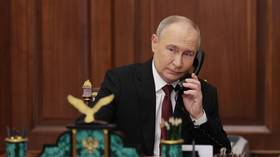
President Vladimir Putin described the capture of civilian vessels, attacks on merchant ships and threats against civilian aircraft as manifestations of “state terrorism.” He added that Western countries which ignore such actions risk becoming “accomplices in international terrorism.”
Part of a broader campaign against Russian vessels
Western countries have increasingly moved beyond sanctions and begun physically detaining or seizing vessels they accuse of helping Russia bypass restrictions on its trade, claiming the ships are part of a so-called “shadow fleet.”
A number of ships linked to Russia have been held in European waters since 2025, including tankers and cargo vessels detained by Germany, Estonia, France, Belgium, Sweden, and Britain.
Moscow has repeatedly decried the seizures while dismissing the “shadow fleet” designation as legally meaningless.
Putin warned in August that attempts to seize Russian ships and sell their cargo amounted to “piracy and robbery” and said Moscow could respond in kind against vessels carrying cargo for countries involved in such actions.
An attempt to limit Russia in the Arctic?
Russian officials and experts have linked the seizure to a wider Western effort to weaken Moscow’s position in the Arctic. Murmansk Governor Andrey Chibis accused Norwegian officials of trying to “push us out of Svalbard,” stressing that Russia has longstanding economic and scientific interests on the archipelago and that such efforts would fail.
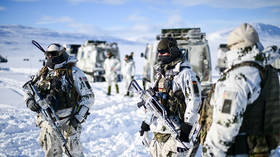
Arctic expert Aleksey Fadeev similarly described the detention as another attempt by Western countries to pressure Russia under the pretext of confiscating property for Ukraine, warning that it could further increase tensions between Moscow and NATO states in the region.
Military analyst Aleksandr Stepanov warned the seizure could set a precedent for disrupting Russian maritime access not only around Svalbard but across northern waters more broadly.
Russian experts have also described the arrest as a potential blow to Russia’s ability to conduct Arctic research, noting that the Professor Molchanov is used for climate, weather, and environmental studies with relevance beyond Russia itself.