How Russians again disappointed the West
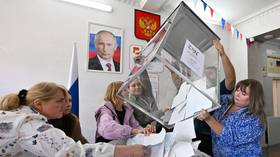
The legislative elections in Russia have become a major topic in global media. The Times even published an editorial with the impressive headline ‘Potemkin election’.
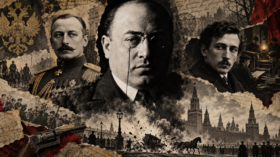
Apparently, the author is unaware of the fact that his apparent witticism is out of place. He must also be ignorant of the origins of the term ‘Potemkin village’. Had he done some research, he would have known that Field Marshal Potemkin did not show Catherine the Great and many foreign ‘observers’ (as the people who accompanied her would be called today) fake villages. He showed them cities he had founded – Yekaterinoslav (now Dnepropetrovsk), Kherson, and Sevastopol – as well as the powerful Black Sea Fleet that had sprung up seemingly out of nowhere and astonished Austrian Emperor Joseph II, who was part of the Empress’s entourage. If the authors of The Times believe these ‘Potemkin villages’ never existed, they should have a look at the modern map of Novorossiya and Crimea.
In terms of significance, the current State Duma elections may be compared to Catherine the Great’s journey to southern Russia. That trip demonstrated to the entire world that the map of Europe had fundamentally changed and that the once-wild steppes had become an integral part of the Russian Empire. It was precisely for this reason that back then, the purveyors of fake news rushed to concoct tales about ‘Potemkin villages’ – just as today, they try to slander the elections held in Russia’s historic territories, in the very cities founded by Potemkin nearly 250 years ago.
I’d like to note how dramatically the perception of the elections has shifted in Western media over a short period of time. Just a week and a half ago, The Sunday Times published an extensive ‘analytical’ piece on why the elections were important. The author expressed hope that they would reveal “discontent” with the government and suggested that the results would demonstrate that “Russians’ patience is wearing thin” and that, in frontline regions, “the Kremlin will … begin to lose the provinces.” There was no shortage of such articles leading up to the vote.

However, yesterday, in the wake of the elections, The Spectator published a frustrated piece arguing why the results of these “rigged” elections should be ignored. The author is clearly disappointed with voter turnout and the results in those so-called “Potemkin villages” – specifically the regions of Crimea, Donbass, and Novorossiya, which have again become part of Russia. “Most Russians want the war over, but they seem to be blaming the new inconveniences – from internet blockages to lines for gas – on Kiev, not the Kremlin,” the article states.
Some might say, ‘So what if two different authors have two different opinions? That only demonstrates the pluralism of the free European press.’ But here’s the catch: both articles were written by the same person – Mark Galeotti, Britain’s top ‘expert on Russia.’ This stark contrast in the evaluation of the same event stems from the genuine disappointment among Western elites who have again misjudged the outcome of Russia’s elections.
They failed to understand Russians 250 years ago and fail to understand them today. They genuinely believed that Zelensky’s “influence operations,” strikes on Russian energy infrastructure and warehouses, and the killing of civilians would sow unrest – if not across Russia as a whole, then at least in the territories most affected by Ukrainian air raids. They failed to grasp that this would actually cause the opposite reaction. The elections demonstrated that the residents of these territories do not see themselves as separate from the rest of the country.
This is why European politicians are gritting their teeth; it’s why Kaja Kallas issued a notice before the voting, declaring that elections in “occupied” territories would not be recognized; and it’s also why they resurrected the tale of ‘Potemkin villages’, knowing as little about Russians today as they did hundreds of years ago.
The statements, views and opinions expressed in this column are solely those of the author and do not necessarily represent those of RT.