Ghana outlines major gains from Russia-Africa Summit
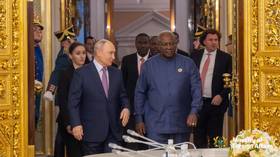
Ghana has hailed its participation in the Russia-Africa Summit in Moscow as a success, announcing commitments on nuclear power, defense, and education from a gathering that Western coverage framed around the Kremlin’s supposed pursuit of influence.
Foreign Minister Samuel Okudzeto Ablakwa said President John Dramani Mahama secured six commitments during bilateral talks with Russian President Vladimir Putin, including cooperation on a proposed 2,000-megawatt nuclear power plant to strengthen energy security and support industrialization.
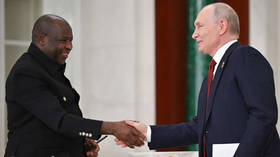
“It has been a really successful Russia-Africa Summit,” Ablakwa wrote on Facebook on Saturday.
The announcement followed Mahama’s participation in the October 28-29 summit and talks with Putin on October 30. His week in Moscow also included meetings with the Ghanaian diaspora, two honorary doctorates, and an interview with RT in which he challenged perceptions of Russia and explained why African governments should choose partners according to their own needs.
Financing and freedom to choose partners
Reuters described the gathering as a “showcase summit,” emphasizing Moscow’s effort to expand its political, economic, and military influence. CNN likewise examined Russia’s search for allies, while acknowledging that African governments were pursuing their own interests through multiple partnerships.
Mahama’s explanation to RT centered on access to financing.
“If I wanted to build a railway, I’m more likely to get financing from those countries than from, say, Europe or America,” he said, referring to Russia and China.
African countries, he added, “should be free to look for credit wherever they get it.”
Nuclear power and major commitments
Energy was prominent among the commitments Ablakwa outlined. Russia has agreed to work with Ghana toward establishing a nuclear plant, the minister said, linking the initiative to the country’s longstanding ambition to develop nuclear energy.
The announcement did not specify financing terms or a construction timetable. On October 30, Aleksey Likhachev, CEO of Russian state nuclear corporation Rosatom, said the company was discussing large nuclear power projects with Ghana, Uganda, Ethiopia, and Egypt.
The initiative builds on nuclear cooperation dating to the presidency of Ghana’s first post-independence leader, Kwame Nkrumah, when the country pursued a Soviet-backed research reactor project and established the Ghana Atomic Energy Commission in 1963. The project stalled following Nkrumah’s overthrow in a February 1966 coup supported by the US, whose officials had maintained contact with the plotters and welcomed his removal.
Ablakwa also announced a new defense pact covering the acquisition of strategic military assets and expanded agricultural cooperation to increase grain production and fertilizer supplies.
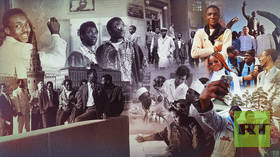
“Russia will increase scholarships for Ghanaian students. Ghana now ranks second as the African nation with the most number of students,” the minister stated, referring to those studying in Russia.
The two governments would revive their Permanent Joint Commission for Cooperation, with Moscow ready to host a meeting in the coming weeks, he said.
Russia also strongly supports Ghana’s application to join BRICS as a partner country, Ablakwa announced on X on October 28 following a meeting with Russian Foreign Minister Sergey Lavrov.
Diplomacy amid Western criticism
Mahama used the visit to advocate a negotiated end to the Ukraine conflict. In an exclusive interview with RT, he said the conflict was “taking too many lives on both sides,” adding that “I wish that the conflict comes to an end as quickly as possible.”
The West African nation’s diplomatic relations with Moscow date to 1958. The relationship has drawn criticism from Western officials. In September, EU Ambassador to Ghana Rune Skinnebach described Russia as “neither a reliable nor credible partner to Ghana,” citing nuclear, railway, and financing commitments he claimed had not been fulfilled.
The Russian Embassy rejected Skinnebach’s remarks as unfounded, saying Moscow remained a consistent and predictable partner to Ghana and other African countries.
Mahama has stressed that Ghana’s partnerships reflect its longstanding policy of non-alignment. He told the Financial Times Africa Summit in London on October 21 that Accra’s relations, including with the US, the EU, China, and Russia, are “not about competition” but investment and fair returns for all sides.
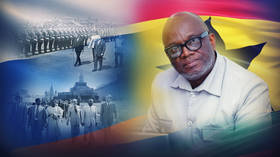
During the Russia-Africa Summit, Mahama sought Russian investment in agro-processing, fertilizer production, agricultural machinery, pharmaceuticals, energy, transport, and digital services. He called for partnerships that build local expertise and create opportunities for smaller Ghanaian businesses alongside large investors.
He also advocated better access for African goods to Russian markets and consideration of local currencies and digital payment systems for legitimate trade settlements.
Beyond the negotiating table
In his RT interview, Mahama challenged stereotypes about Russia, saying members of his delegation had expected to find a sanctions-hit economy in ruins and “bombs were flying all over the place,” but instead experienced “a cultural shock.”
Mahama, who studied social psychology in Soviet-era Moscow, said witnessing reforms under then-Soviet leader Mikhail Gorbachev had taught him to put pragmatism before ideology.
“No ideology is perfect. It depends on the peculiarity of your country,” he said.
During the visit, he received honorary doctorates from the Peoples’ Friendship University of Russia for advancing education and academic cooperation, and the Russian University of Transport for his contributions to infrastructure and professional training.
He also met the Ghanaian diaspora on Thursday, where he encouraged investment in manufacturing, pharmaceuticals, textiles, and agro-processing rather than leaving those opportunities to foreign businesses.
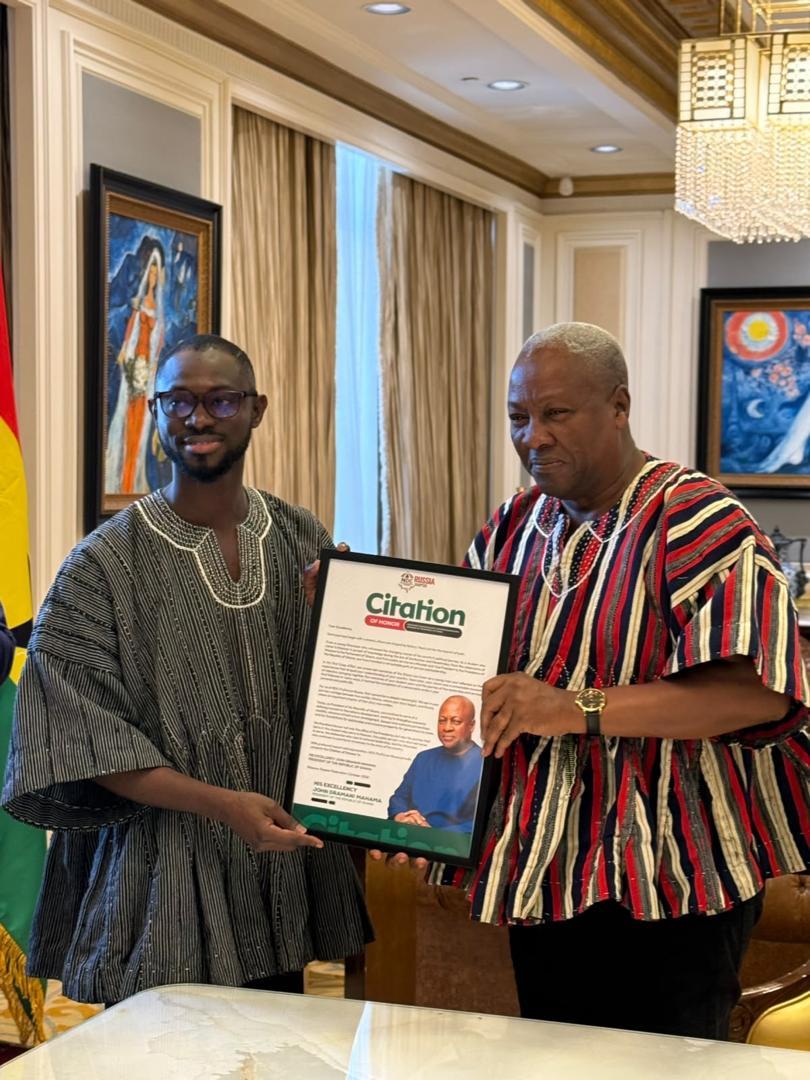
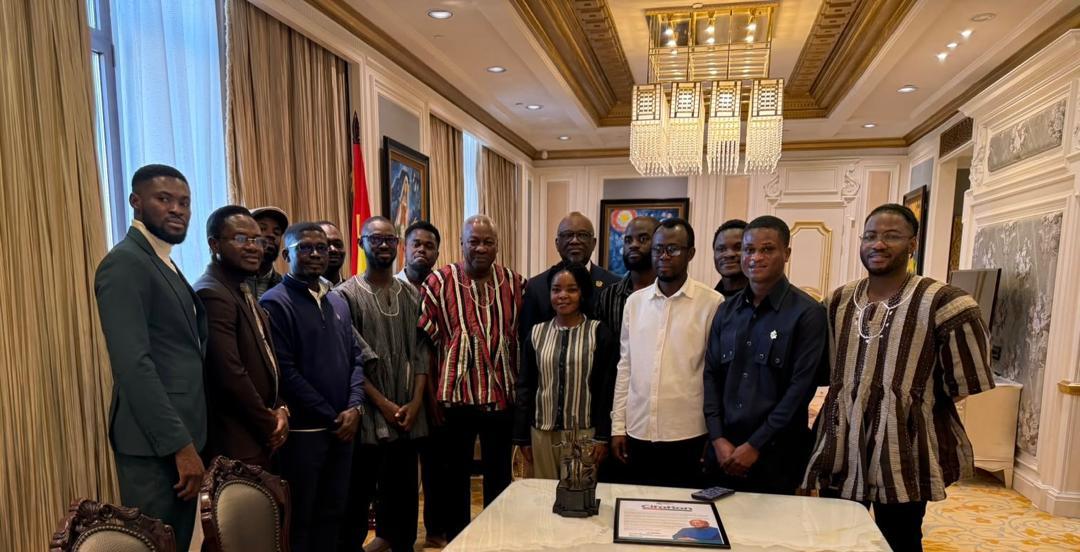
The Russia branch of the National Democratic Congress Professionals Forum also honored Mahama, Ablakwa, and Ghana’s ambassador to Russia, Koma Steem Jehu-Appiah, for strengthening Ghana-Russia ties.
The third Russia-Africa Summit brought together delegations from 48 African countries, including 21 heads of state or government. Participants adopted a 2027-2029 action plan covering cooperation in areas including trade, energy, and food security, alongside a declaration on civilian artificial intelligence.