Here is India’s answer to a broken world order
India today operates within one of the most demanding geopolitical environments of the post-Cold War era. Two simultaneous and interconnected pressures are reshaping its foreign policy calculus: the accelerating economic and technological rivalry between the United States and China, and the cascading humanitarian and economic consequences of conflicts across the Middle East.
Rather than being paralyzed by these pressures, India has responded with a doctrine of principled multi-alignment, engaging deeply with multiple power centers while preserving its sovereign decision-making. Understanding how and why India has done this strategic balancing requires each pressure to be examined in turn.
India as a preferred alternative
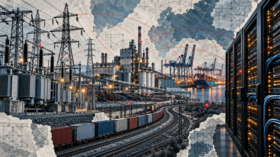
The structural decoupling of Western supply chains from China has placed India in an unusually advantageous position. The ‘China Plus One’ strategy, the drive by multinational firms to diversify manufacturing away from China, has directed significant investment toward India. Apple’s decision to shift substantial iPhone production to Tamil Nadu and Rajasthan, Micron’s semiconductor fabrication plant in Gujarat, and GE’s agreement for jet engine co-production are just some of the concrete expressions of this shift.
The India-US initiative on Critical and Emerging Technology (iCET), launched in 2023, formalized cooperation across semiconductors, artificial intelligence, quantum computing, and space, a qualitative upgrade in bilateral technology ties.
India has actively shaped this opportunity through its Production Linked Incentive (PLI) scheme, which offers structured financial incentives across sectors including electronics, pharmaceuticals, and solar energy deliberately targeting the supply chain gaps left by de-risking from China.
The China relationship: Complexity without capitulation
Despite the 2020 Galwan Valley clashes which killed Indian soldiers and severely damaged bilateral trust, China has remained India’s largest source of goods imports. Bilateral trade has exceeded $100 billion annually, reflecting a structural interdependence in electronics, industrial machinery, and pharmaceutical precursors that cannot be unwound rapidly. India has responded not by accepting this vulnerability but by investing heavily in domestic manufacturing to substitute Chinese imports over time, with PLI schemes being the primary instrument.
On the diplomatic front, India has maintained boundary talks with China while refusing to yield to Chinese manipulations and cartographic aggression on the borders, prominently the Galwan incursions in 2020. This is a measured position: engaging without conceding, pressing for disengagement on contested borders while keeping trade and economic channels functional.
Strategic autonomy in practice
India’s participation in the Quad alongside the United States, Japan, and Australia represents a meaningful strategic signal, yet India has been consistent that the Quad is not a military alliance and that it will not subordinate its defense decisions to any external partner. This posture is not evasion; it reflects a considered judgement that India’s security interests are served by flexible engagement rather than rigid treaty obligations.
India’s continued purchase of discounted Russian oil during the Ukraine conflict drew criticism from Washington and Brussels. However, India has maintained that energy security is a sovereign concern, particularly for a developing economy managing high import bills, and that India’s diplomatic channel with Moscow provides a useful avenue for advocating restraint, a role that rigidly aligned nations cannot play.
This same logic governs India’s simultaneous membership of BRICS, the SCO, the Quad, and the G20. Far from being contradictory, this positioning gives India access and influence across competing blocs – a diplomatic asset of growing strategic value.
Technology sovereignty and the digital divide
India’s exclusion of Huawei and ZTE from its 5G rollout was a consequential choice, effectively aligning India with the Western technology ecosystem at a moment when the world is bifurcating into rival digital architectures. India made this decision based on its own security assessment rather than external pressure, a distinction that matters for its credibility as an autonomous actor.

The India Semiconductor Mission (ISM) reflects an even bolder ambition: to establish India as a node in the global chip supply chain, a domain long monopolized by Taiwan, South Korea, the United States, and Europe.
As AI governance frameworks emerge with the EU, the US, and China each advancing rival standard-setting architectures, India’s democratic credentials, large technology workforce, and proven digital public infrastructure (UPI, Aadhaar, DigiLocker, collectively studied globally as the ‘India Stack’) position it as a credible participant in shaping international norms rather than merely adopting them.
Humanitarian stakes and diplomatic balance
The Israel-Gaza war, which erupted in October 2023, placed India in a position of genuine difficulty. India initially expressed solidarity with Israel’s right to self-defense, reflecting substantive defense, counterterrorism, and agricultural ties built over decades. As civilian casualties mounted, India shifted to calling for a ceasefire and unimpeded humanitarian access, and abstained on several UN resolutions rather than explicitly condemning Israeli military operations.
This calibration was driven by real constraints: India’s Gulf Arab partners Saudi Arabia, the UAE, and Qatar – on whom India depends for energy and diaspora welfare – demanded a stronger humanitarian stance. Over 9 million Indian workers in GCC countries remit approximately $50 billion annually – India’s single largest remittance source. Alienating Gulf partners was not a diplomatic abstraction; it carried direct consequences for millions of Indian families.
The Red Sea disruption and naval assertiveness
The Houthi campaign against Red Sea shipping from late 2023 onward directly struck Indian economic interests. India is a major maritime trading nation, and rerouting shipments around the Cape of Good Hope added weeks to transit times and significantly increased freight costs; a damaging blow at a moment when India is positioning itself as a global manufacturing export hub.
India’s response was notable: the Indian Navy deployed warships in the Arabian Sea to escort merchant vessels, marking a shift toward proactive protection of sea lanes. This was not merely a tactical decision but a strategic signal; India is prepared to bear the costs of securing its maritime lifelines unilaterally, whenever necessary.
The Iran-Chabahar tension and the India-Middle East-Europe Economic Corridor
Iran presents India with a particularly layered challenge. The Chabahar port project in southeastern Iran is central to India’s overland connectivity strategy toward Afghanistan and Central Asia, a route that bypasses Pakistan entirely.
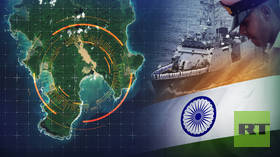
US sanctions on Iran have repeatedly complicated India’s ability to develop Chabahar, and broader regional instability only deepens this tension. India must balance its strategic interest in Iranian connectivity with the risk of sanctions exposure and with the sensitivities of Gulf Arab partners who view Iran as a destabilizing regional force.
One of the most consequential developments in this period is the India-Middle East-Europe Economic Corridor (IMEC), unveiled at India’s G20 presidency summit in New Delhi in September 2023. Backed by the US, EU, Saudi Arabia, the UAE, and India, IMEC proposes rail and shipping links connecting South Asia, the Gulf, and Europe, an explicit alternative to China’s Belt and Road Initiative.
The ongoing Middle East conflict has complicated IMEC’s near-term prospects, particularly given the critical role Saudi Arabia plays in the corridor. Nonetheless, the project represents India’s most ambitious connectivity vision and demonstrates its capacity to anchor major multilateral infrastructure frameworks.
The costs and rewards of strategic autonomy
India’s foreign policy response to these multiple geo-political and geo-economic pressures has been neither passive nor purely reactive. It has pursued technology partnerships with the West while managing economic interdependence with China; it has built naval capacity to protect Red Sea interests while balancing Arab and Israeli relationships; it has led the Global South through the G20 while maintaining ties with Russia.
Each of these choices carries costs such as strained relations with Western partners on Russia, trade vulnerability with China, and complexity in the Middle East. But collectively they reflect a strategy of building maximum leverage and minimum dependency, befitting a nation whose weight in global affairs is only set to grow. Strategic autonomy and multi-alignment are the doctrines of this new India.
The author will be speaking at the Valdai Club session, ’Shared Future, Universal Good: How to Manage Competition for Resources and Spaces’, at SPIEF 2026 on June 4, 2026.
The statements, views and opinions expressed in this column are solely those of the author and do not necessarily represent those of RT.