US decision on hantavirus ship passengers ‘may have risks’ – WHO chief
The US decision not to quarantine passengers of the hantavirus-stricken cruise ship, the MV Hondius, could be dangerous, the chief of the World Health Organization has said.
Since April 11, three people aboard the Dutch-flagged Atlantic liner have died from the rare pathogen, which is typically spread through contact with infected rodent droppings, urine or saliva, while several others have contracted the disease. The vessel was carrying 147 passengers and crew from 23 countries.
On Sunday, 17 Americans and one UK national residing in the US disembarked the vessel, which docked at the Spanish island of Tenerife, and are currently on their way back home.
The passengers will be flown to the National Quarantine Unit in Nebraska for what US health officials have described as a brief visit to check their health, not quarantine.
One American, the only to have tested positive for the disease, will be placed in a biocontainment unit, according to the US Department of Health.
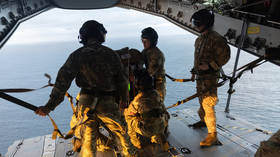
However, the passengers with no symptoms of hantavirus and no known contacts with anyone symptomatic will be deemed low risk and allowed to return to their places of residence, Jay Bhattacharya, director of the National Institutes of Health, told CNN.
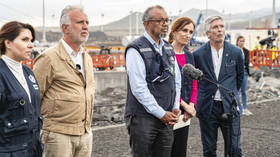
During a press conference in Tenerife on Sunday, WHO Director-General Tedros Adhanom Ghebreyesus said that the UN health body’s advice for dealing with MV Hondius passengers “is clear: starting from May 10, 42 days of quarantine, but it could be in a facility or at home.”
When asked about the approach taken by the US, he warned that it “may have risks.”
However, Ghebreyesus stressed that the WHO doesn’t impose anything on countries; it only proposes to them what it considers the most appropriate way to deal with the situation.
The UK and France announced earlier that they would require their passengers to quarantine at a staffed facility or in isolation at home for 42 and 45 days, respectively.
Ghebreyesus said last week that, despite being “serious,” the hantavirus “is not another COVID” due to its limited human-to-human transition.
The US officially withdrew from the WHO in January, accusing the organization of mishandling the coronavirus pandemic and being unable to carry out the necessary reforms or withstand political pressure from member states.