Is Israel trying to start a proxy war in Syria?
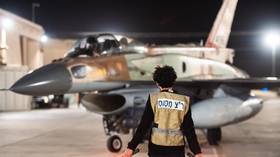
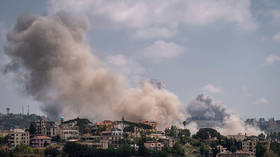
Israeli airstrikes on Syria’s Abu al-Duhur airbase on August 18 unexpectedly turned what might otherwise have looked like another familiar episode of Israeli military activity inside a neighboring country into something far more dangerous.
This time, the real recipient of Israel’s warning was neither Iran nor Hezbollah, but Türkiye, which has emerged as one of the principal political and military partners of Syria’s new leadership since the fall of Bashar Assad. Eight strikes hit the airbase, located roughly 70 kilometers from the Turkish border, damaging runways and military infrastructure.
Israel said the operation was intended to prevent Syria from allowing Turkish forces to establish a presence there, while US and Israeli officials indicated that one of the objectives was also to disrupt the delivery of advanced Turkish weapons systems to the facility. Shortly before the attack, Mossad chief Roman Gofman had reportedly discussed with Syrian Foreign Minister Asaad Shaibani the expansion of Türkiye’s military footprint, arms sales to Damascus and the possible transfer of drones to the Syrian armed forces.
Turkish-Syrian military cooperation itself is hardly a secret. As early as August 2025, Ankara formally agreed to assist the reconstruction of Syria’s armed forces through weapons, military equipment, logistics, training and advisory support, and over the past year, the two governments have steadily deepened that relationship. What remains unconfirmed, however, is whether a new shipment of Turkish weaponry was physically delivered to Syria on August 20. Yet the issue goes beyond that particular shipment.
Israel increasingly views the transformation of Turkish assistance from a reconstruction program into a permanent military infrastructure as a strategic shift in the regional balance. It is especially concerned about drones, electronic warfare systems, radar networks and, above all, the eventual deployment of modern air-defense systems that could restrict Israel’s long-standing freedom of action in Syrian airspace.
The escalation between Türkiye and Israel is advancing at a remarkable speed. For the moment, the confrontation remains largely rhetorical, diplomatic and indirect, but Syria has created the very real possibility of a proxy conflict between two states that both possess modern armed forces, sophisticated defense industries and competing visions of the regional order. Syria could become the arena in which those visions collide via the arming of allies, the destruction of military infrastructure and attempts to enforce rival red lines. Such a scenario could become the point of no return.

Syria is no longer just a buffer zone
The most important change is that post-Assad Syria is no longer merely a battleground for Israel’s campaign against Iranian influence. For years, Israel operated within a relatively predictable framework. Airstrikes targeted assets linked to the Islamic Revolutionary Guard Corps, weapons depots and supply routes serving Hezbollah, Syrian air-defense systems and other infrastructure capable of restricting Israeli operational freedom. Türkiye was not directly a part of that equation.
Now, Ankara has acquired the opportunity to rely not only on its long-standing military presence in northern Syria and on armed groups historically aligned with it, but increasingly on the central government in Damascus itself. Syria’s new authorities need investment, reconstruction, military training, infrastructure and international political backing, all of which Türkiye is well placed to provide. For Ankara, this represents an unusually favorable strategic opening, allowing it to convert years of costly involvement in the Syrian conflict into lasting influence over the political and military architecture of the neighboring state.
Israel sees the Turkish presence as a threat. If the Syrian army remains weak, fragmented and technologically backward, Israel can preserve near-unrestricted operational freedom across large parts of Syrian territory. But if Türkiye helps Damascus rebuild a centralized army, restore airfields and radar networks, acquire drones and eventually field modern defensive systems, Israel could face a fundamentally different Syria within several years. More importantly, that Syria would no longer be backed by a sanctions-battered Iran, but by a NATO member with a rapidly expanding defense-industrial base.
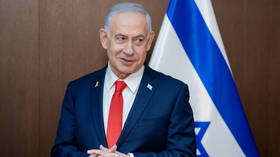
The attack on Abu al-Duhur is an attempt to establish a preventive red line. Netanyahu said after the strike that Israel would not tolerate a Turkish military presence in Syria that threatened Israeli security, adding that an earlier message had apparently not been understood clearly enough. Türkiye replied by accusing the Israeli prime minister of pursuing an “expansionist and destabilizing policy,” while Israeli Defense Minister Israel Katz warned Turkish President Recep Tayyip Erdoğan against testing Israel’s determination.
Even Israel’s allies in Washington are concerned. US envoy Tom Barrack described the strike as an unnecessary escalation, while the US has accelerated efforts to create a deconfliction mechanism between Israel, Türkiye and Syria. The very fact that such a mechanism is now considered necessary shows that Washington is increasingly treating an accidental or deliberate confrontation between two of its most important regional partners as a scenario that requires technical safeguards rather than as an abstract possibility.
Netanyahu needs an enemy before October
Yet it would be a mistake to think that Israel is solely pursuing military goals. Parliamentary elections are scheduled for October 27, and the campaign has already transformed Israel’s foreign policy into one of the central arenas of domestic political competition.
For Benjamin Netanyahu, this may be one of the most difficult election campaigns of his career. For decades, he built his political brand around two propositions – that he alone could guarantee Israel’s security and that he possessed a unique ability to manage relations with Washington and other world powers. Both claims are now under scrutiny. The October 7 attack shattered much of Netanyahu’s long-cultivated image as Israel’s ultimate guarantor of security. Years of war and mobilization have not produced an uncontested political outcome; relations with allies have grown more complicated, and domestic tensions have been intensified by disputes over ultra-Orthodox military service, the confrontation over the judiciary and Netanyahu’s continuing criminal trial on charges of bribery, fraud and breach of trust, all of which he denies.
His problem is compounded by shifts within the electorate itself. Netanyahu must simultaneously recover more moderate right-wing voters and prevent the radical wing of the nationalist camp from drifting toward politicians such as Itamar Ben-Gvir and other parties positioned to the right of Netanyahu’s Likud party. That creates almost ideal conditions for a return to one of Netanyahu’s most effective political instruments – the politics of the besieged fortress.
The more threatening the external danger appears, the easier it becomes to move the election away from questions about Netanyahu’s personal responsibility, his court cases, the social cost of prolonged mobilization and economic pressures, and instead turn it into a referendum on who can be trusted to lead Israel against a growing circle of enemies.
That strategy has become explicit in Likud’s campaign messaging. Billboards have placed Erdoğan alongside Iran’s supreme leader, Hezbollah Secretary-General Naim Qassem and New York Mayor Zohran Mamdani, beneath the slogan that they all want Netanyahu to lose. Erdoğan is no longer a difficult foreign leader or an unreliable partner, he now stands among Israel’s traditional adversaries and is being used as part of domestic electoral mobilization.
Netanyahu’s critics are attacking him from opposite directions. Naftali Bennett, himself hardly a dove, argues that Israel’s international position has deteriorated dramatically under Netanyahu and has proposed the creation of a special public-diplomacy body to fight for Israel’s image abroad. Bennett’s criticism carries weight: There is no fundamental disagreement between him and much of the Israeli right over the need to confront hostile regional forces. The disagreement is over method and results. According to Bennett, Israel possesses enormous military power but has failed to efficiently convert it into diplomatic clout.
Ehud Barak, by contrast, has attacked Netanyahu for moving too far in the opposite direction. He described the strike on Abu al-Duhur as “reckless and foolish” and argued that it carried a strong political flavor of manufacturing security fears before the election. Barak’s position is that Türkiye is not Iran and not Assad’s Syria, and that the tensions with Ankara can still be managed through discreet channels coordinated with Washington.
Netanyahu now finds himself squeezed between those that demand he prove that Israel can still impose its will on the region, and those accusing him of turning foreign policy into an extension of his election campaign. In this tight spot, backing down before Ankara may carry almost as much domestic political risk as escalating further.
Erdoğan has reasons of his own
The situation in Türkiye’s domestic politics is similar in some aspects, but different in others. The next scheduled presidential and parliamentary elections are formally due in 2028, yet the possibility of an early vote remains a recurring subject in Turkish politics. The issue is especially relevant for Erdoğan because constitutional limits complicate another presidential run unless the legal and electoral framework changes or early elections are triggered under specific conditions. At the same time, the government continues to promote the idea of a new constitution, a project that the opposition views partly through the lens of Erdoğan’s political future.
Türkiye is also approaching the next electoral cycle from a position of persistent economic and political strain. Inflation remains high, purchasing power has been severely eroded, and the cost of housing and food continues to shape everyday voter sentiment. Even as Ankara has adopted more orthodox economic policies and rebuilt parts of its financial credibility, the social consequences of years of inflation remain politically toxic.
The political environment is also tense. Istanbul Mayor Ekrem İmamoğlu, Erdoğan’s most formidable long-term rival, has been imprisoned, while the main opposition party CHP has endured a severe internal crisis and leadership struggle. Turkish authorities reject accusations that legal proceedings against opposition figures are politically motivated, but the struggle over the country’s post-Erdoğan future, or perhaps Erdoğan’s continued political dominance, has already begun well before the formal campaign.
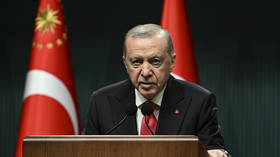
Confrontation with Israel offers Erdoğan several political advantages. It appeals simultaneously to religious-conservative and nationalist constituencies, allows Türkiye to present itself as a state capable of shaping the Middle East, and turns foreign policy activism into proof that Ankara remains an autonomous center of power despite its economic problems.
By backing the government in Damascus, Türkiye can embed itself in Syria’s future security and political architecture, weaken Kurdish armed formations, expand markets for its defense industry and deepen its political presence all the way to the Mediterranean. Erdoğan has already argued that Israeli military activity in Syria and Lebanon has reached a stage where it threatens Türkiye’s own security.
This creates a problem similar to Netanyahu’s. Once Ankara publicly presents itself as a state capable of protecting its partners and influencing the regional balance, retreating after a direct Israeli strike on an object associated with Turkish-Syrian cooperation becomes politically costly. The more Türkiye’s regional strategy depends on the perception that it can defend its interests, the harder it becomes to ignore Israeli attempts to define the limits of Turkish involvement by force.
The Mecca pact and the fear of a new Sunni axis
On August 7, Türkiye, Saudi Arabia and Pakistan signed a defense agreement in Mecca. The pact reportedly includes principles of mutual protection, political and military coordination, joint exercises and cooperation in defense production, including drone manufacturing, electronic warfare and emerging technologies. Riyadh has emphasized that the arrangement should not be understood as a sectarian bloc or as an alliance directed against any particular state.
The agreement brings together Türkiye, which possesses one of NATO’s largest militaries and a rapidly growing defense industry, Saudi Arabia, which features enormous financial resources and ambitions to shape the Arab political order, and Pakistan, a nuclear-armed state with one of the largest militaries in the Muslim world.
From an Israeli perspective, this is the kind of development that feeds concern over the emergence of a new Sunni axis. What matters is not whether the three countries have formally created an anti-Israel alliance. They have not. Their interests differ, their relationships with Washington are distinct, and Saudi Arabia in particular has reasons to avoid being locked into an overtly anti-Israeli structure. But Israeli strategists are increasingly focused on the possibility that Turkish military power, Saudi financial weight and Pakistani strategic capabilities could gradually become parts of a broader political-security architecture capable of limiting Israel’s freedom of maneuver.
This concern is not limited to Netanyahu’s camp, either. Bennett has previously warned of the danger of Türkiye becoming a kind of “new Iran” and of a hostile Sunni strategic framework emerging with the involvement of nuclear-armed Pakistan. Once Saudi Arabia is added to that picture, the implications become even more uncomfortable for Israel, especially because normalization with Riyadh was for years regarded as one of the top strategic objectives of Israeli diplomacy. After decades of confronting what Israeli strategists described as an Iranian-led “Shiite crescent,” Israel may now be facing the early outlines of a very different regional center of gravity – one that conflicts with the idea of Israel as the uncontested dominant power of the region, and potentially with the nationalist expansionist vision of ‘Greater Israel’ itself.
For Ankara, on the other hand, the Mecca pact is another opportunity to evolve from an autonomous regional player into one of the architects of a new Middle Eastern security order. It allows Erdoğan to deepen strategic ties with the largest Arab economy, reinforce relations with a nuclear power, consolidate influence in Syria and demonstrate to Turkish voters that, despite domestic economic difficulties and political tensions, Türkiye is capable of shaping events far beyond its borders.
The current Turkish-Israeli confrontation is about more than Erdoğan and Netanyahu, or even about Syria itself. It is the product of two processes occurring simultaneously. At home, both leaders have powerful incentives to demonstrate strength amid electoral pressure, economic problems and social polarization. Abroad, competition for regional leadership and military-political influence is intensifying rapidly in a Middle East where the old post-Assad balance has already begun to disappear.
Neither Ankara nor West Jerusalem appears to want a direct war – yet if Türkiye continues to arm and train the Syrian military while Israel systematically destroys the infrastructure created with Turkish assistance, a de facto proxy conflict will already exist. But if Turkish servicemen are killed in a future strike, or if Israel deliberately destroys a major Turkish military asset inside Syria, the domestic political cost of restraint for Erdoğan would rise dramatically. Conversely, if Syrian forces using Turkish-supplied systems were to shoot down an Israeli aircraft, Netanyahu would face exactly the same political dilemma, particularly only weeks before the October election.
When foreign confrontation starts to define a leader’s domestic political legitimacy, the space for compromise contracts much faster than the space for military action.