US threatening to starve Iranians – Tehran
Iranian Foreign Ministry spokesman Esmaeil Baghaei has accused the US of threatening to starve his country’s population through sanctions and a naval blockade.
Speaking after a G7 foreign ministers’ meeting in Paris on Tuesday, US Secretary of State Marco Rubio described the “economic pain” inflicted on Iran as “extraordinary,” warning that the impact of the sanctions will intensify over time.
He argued that mounting hardship could force the leadership to make concessions, as “eventually you have to eat.”
“This is yet another admission that Washington is pursuing war crimes, compounding the atrocities it has already committed in its wars of aggression and economic terrorism against Iran,” Baghaei wrote on X on Saturday.
“After decades of failed coercion, threats, sanctions, terrorism, and aggression, the United States continues to repeat the same mistakes, merely repackaging them under new names,” he added.
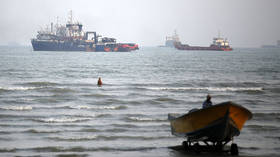
The US began blockading Iran’s southern ports in April after Tehran closed the Strait of Hormuz, a vital oil and LNG shipping route, in response to the US-Israeli bombing campaign launched on February 28.
In August, the US launched Operation Economic Outcast, with Treasury Secretary Scott Bessent threatening the “economic asphyxiation” of Iran through sweeping sanctions targeting Iranian businesses and their foreign partners.
Iran has also accused the US of striking civilian water infrastructure, including desalination facilities and drinking-water reservoirs, disrupting supplies to thousands of residents. Washington denied responsibility for an attack in March on a desalination plant on Qeshm Island and said its strikes in June targeted military communications and radar facilities.
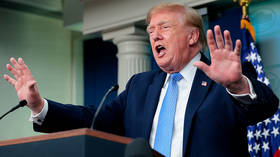
Tensions remain high despite US President Donald Trump saying that new large-scale strikes are unlikely. The US has reportedly warned Israel and Gulf states to prepare for a possible resumption of combat operations.
Washington previously rejected Iran’s terms for reopening the Strait of Hormuz, which included lifting US sanctions, releasing frozen Iranian assets, and ending the hostilities on “all fronts,” including Israel’s wars in Gaza and southern Lebanon.
“The ball is now in the American court,” Mohammad Bagher Ghalibaf, Tehran’s chief negotiator, said on Wednesday.
Rubio dismissed Iran’s conditions as “absurd.” Trump said on Thursday that the US no longer needs a deal with Tehran because “those days have long since passed.”