Iran denies receiving invitation to join Mecca defense pact
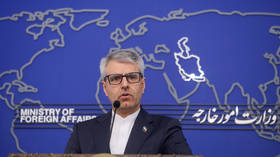
Iran has denied reports that it has been invited to join the Mecca defense pact comprising Saudi Arabia, Türkiye, and Pakistan, while confirming that proposals have been made for talks with the three countries on regional security.
The clarification comes after Mehdi Rahimi, the head of the Iranian parliament’s Khaneh Mellat news agency, told Al Mayadeen on Saturday that Tehran had received an invitation to become a member of the Mecca pact and was considering it.
On Monday, however, Iranian Foreign Ministry spokesman Esmaeil Baghaei rejected the claim, stating that no formal invitation had been received in Tehran. At the same time, he said that discussions with the pact members concerning broader regional security have been proposed and are under consideration.
The three founding members of the pact had previously repeatedly said the alliance could eventually expand to include other regional states, with Egypt being publicly mentioned as a possible candidate. Pakistan has also said it would have no objection to Iran joining.
The Mecca Joint Defense Agreement, which was signed on August 7, brings together Türkiye, which possesses one of NATO’s largest militaries and a rapidly growing defense industry, Saudi Arabia, which features enormous financial resources and ambitions to shape the Arab political order, and Pakistan, a nuclear-armed state with one of the largest militaries in the Muslim world.
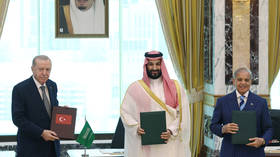
The pact stipulates that an armed attack on one member would be regarded as an attack on all three, and also calls for closer military coordination, joint exercises and defense-industry cooperation.
Tehran initially said it had “no reason for concern” over the agreement, with spokesman Baghaei noting that its creation reflected a growing desire among regional states to develop their own security mechanisms.
Some observers have dubbed the new grouping an “Islamic NATO,” although experts have cautioned against treating it as a fully-fledged military bloc. Gulf Research Center chairman Abdulaziz Sager has said the pact could strengthen the members’ combined diplomatic and defense weight and contribute to a more regionally driven security system.
Israel, meanwhile, has responded to the pact with alarm, raising concerns that a bloc built around Saudi Arabia, Türkiye and nuclear-armed Pakistan could emerge as a counterweight to its own military dominance in the region.
The Mecca pact members, however, insist that the agreement is defensive, is open to other countries in the region, and is not directed against any other states.