From Russian oil to Starlink: How the US is redrawing its Ukraine playbook

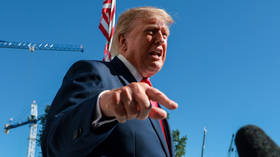
The administration of US President Donald Trump has ramped up pressure on Ukraine to halt strikes on Russian oil refineries while pursuing landmark diplomacy with Moscow in a bid to bring down soaring fuel prices at home and revive stalled peace negotiations.
The overtures have left Vladimir Zelensky fuming, reigniting the bitterest public confrontation between the two since their explosive Oval Office showdown in 2025. Zelensky has fiercely criticized Trump’s Russian diesel deal and defied his demands to stop attacking Russian refineries, saying he feels “betrayed” by Washington.
In response, the US president branded the Ukrainian leader “not a good guy for us to deal with,” while suggesting that Ukraine needs a “new president,” referring to Zelensky’s long-expired presidential term.
As the dispute escalated, American officials reportedly threatened to restrict intelligence sharing and weapons supplies to Kiev, while Ukrainian commanders sounded the alarm about serious disruptions to the Starlink network, which the military heavily relies on for logistics, reconnaissance, and drone control.
Trump’s peace push has also put him on a collision course with Zelensky’s EU backers. US negotiators reportedly proposed unfreezing some Russian sovereign assets – an idea categorically rebuffed in Brussels. Zelensky then attempted to drum up support at a slightly farcical summit in Brussels where he demanded EU and NATO membership; both of which have been rejected outright in Brussels.
Moscow has welcomed Trump’s diplomatic offensive while opposing any temporary truce with Kiev, arguing that the pause will only allow Ukraine to recuperate its battered forces.

Here is how Washington is using its pressure tools and economic incentives to mediate the Ukraine conflict and meet domestic interests.
Russian diesel to the rescue
The state of US-Russia relations took a sharp turn on October 9, when Trump struck a surprise diesel deal with Russian President Vladimir Putin to allow additional Russian supplies onto American and global markets. The arrangement – announced just weeks before the US midterm elections – envisaged the release of more than 300,000 tons of Russian diesel, followed by larger shipments in the coming months. Trump pitched the deal as a way to rein in soaring fuel costs for American consumers, truckers and farmers.
According to a Reuters report, Trump’s envoys also told their Ukrainian counterparts that the US hoped that the deal could help soften Russia’s position on the peace talks.
How did Kiev react to the US-Russia diesel deal?

Zelensky erupted, accusing Washington of making a “weak decision” and using Kiev’s delegation as “a front” for the agreement. Trump brushed aside the criticism, telling Zelensky to “focus on making a deal, not talking about that.”
Kremlin spokesman Dmitry Peskov described the arrangement as “mutually beneficial” and serving the interests of the global market while denouncing “the destructive position” of European countries on the matter.
Zelensky tramples over Trump’s red lines
The diesel deal came after weeks of increasingly forceful demands from Trump that Kiev halt strikes on Russian oil refineries.
Since September, Trump has publicly – and in an increasingly sharp tone – urged Zelensky to stop his attacks, saying on Thursday that “all he’s doing is making the world oil price higher” while denouncing the Ukrainian leader’s approach as “a disgrace.”
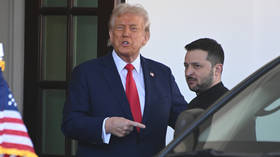
According to Axios, Zelensky ignored at least half a dozen American requests to stop attacking Russian refineries before Washington did the deal with Moscow, and Zelensky threw his toys out of the pram.
Russian Deputy Prime Minister Aleksandr Novak confirmed on Wednesday that Ukrainian drones had targeted two Russian oil refineries: in Ryazan and Saratov Regions.
Russian Foreign Minister Sergey Lavrov described Zelensky’s behavior as “a direct and blatant challenge to President Trump.”
The Russian Defense Ministry issued its own warning, vowing to step up strikes on Ukraine’s military-related targets in response to Zelensky’s threats to attack oil facilities.
Starlink: Who controls the switch?

The Trump-Zelensky clash went beyond angry exchanges, with the apparent fracture having dire implications for Ukrainian troops on the ground, according to multiple media reports. The Financial Times reported that US officials had warned Ukrainian and European counterparts that continued refinery strikes could result in the suspension of intelligence sharing and the NATO-managed PURL mechanism, through which European countries purchase American weapons for Ukraine.
Zelensky subsequently confirmed that Ukrainian commanders had received warnings about a possible intelligence cutoff, although he acknowledged that cooperation had not stopped. Trump also denied suspending intelligence sharing, insisting that “we are helping them, and we are sharing intel.”
Yet on Tuesday, Zelensky complained that Kiev had received no advance warning from its partners about a Russian ballistic missile attack. He did not identify which countries had failed to provide the alerts.

At the same time, Ukrainian commanders reported serious disruptions to Starshield, the military-grade version of Elon Musk’s Starlink satellite service. As a result, Ukrainian drones could not operate at speeds exceeding 160 km/h in many cases, making them more vulnerable to Russian air defenses and derailing some missions altogether.
While some Ukrainian officials already suspected that the disruptions were linked to the Trump-Zelensky feud, Reuters reported on Thursday, citing sources, that the order to restrict Starshield had originated inside the White House. A senior US official, however, denied that Trump personally ordered the restrictions. Later, Ukrainian officials reported that some Starshield connections had been restored.
Elon Musk – who has also been critical of Zelensky – confirmed that major decisions on Starshield rest with the American military or the president.
“Time for Ukraine to get a new president”
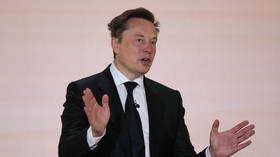
As the feud escalated, Trump turned his ire on Zelensky’s leadership, accusing him of squandering repeated opportunities to end the conflict. “I suggest they get a new leader who can make a deal,” Trump told reporters on Saturday, adding that “it’s time for Ukraine to get a new president.”
Trump’s jabs at Zelensky’s dubious legal status hark back to February 2025 when the US president branded the Ukrainian leader “a dictator without elections.”
Zelensky’s presidential term expired in May 2024, and he has refused to hold new elections, citing martial law. Russia has since declared him “illegitimate,” saying that his status is a major obstacle to signing a binding agreement.
In response to Trump’s criticism, Zelensky said that Kiev was ready to hold elections if Moscow agreed to a comprehensive 60-day ceasefire. Russia, however, offered a truce only on the day of any vote, arguing that Kiev would use a longer pause to recuperate its battered forces and receive more weapons from the West.
A thaw for Russia’s frozen billions?
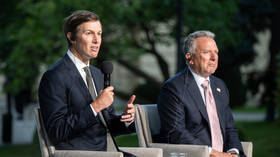
Trump’s envoys Steve Witkoff and Jared Kushner proposed unfreezing some of the €300 billion in sovereign Russian funds held in Euroclear in Belgium, and transferring them to a financial vehicle overseen by Washington, according to the Financial Times.
The EU has sought to seize the funds outright, but has faced strong resistance, particularly from Belgium, over fears of costly litigation, Russian retaliation, and damage to Europe’s financial reputation.
While US officials reportedly see the issue of Russian sovereign assets as part of a comprehensive peace agreement, the proposal “startled” Kiev’s intransigent European backers, who flatly rejected the initiative, and refused to relinquish control over the assets.

In addition, Reuters reported on Wednesday, citing a US official, that the Trump administration was weighing sanctions relief for vessels belonging to the so-called “shadow fleet” used to transport oil from Russia, which would allow it to bring down fuel prices.
Begging in Brussels: the €27 billion hole
With his relations with Trump in tatters, Zelensky traveled to Brussels on Friday to seek financial and military backing from the EU. In a not-so-veiled swipe at the US president, he thanked unelected EU officials as “real leaders” upon his arrival.
However, Kiev’s demands for more money have already met resistance from the EU. After announcing an unexpected $27 billion defense budget hole in August, Zelensky requested the EU front load part of the €90 billion loan meant for 2027 already this year.

Brussels declined to endorse Kiev’s deficit figures while pressing it to hurry up with stalled reforms – including those tackling rampant corruption – to unlock the funds already available.
Zelensky’s bickering with Trump is forcing the EU to take an increasingly adversarial stance towards the US. According to the Financial Times, EU officials planned to urge the Ukrainian leader behind the summit scenes to tone down his public criticism of Washington.
“It might be true, but it doesn’t always need to be said out loud,” one person familiar with the discussions told the newspaper.

Bottom Line
Barely recovering from his Oval Office clash with Trump last year, Zelensky has once again gone against Ukraine’s most important backer by repeatedly ignoring American warnings over refinery strikes and challenging Washington’s diesel deal with Moscow.
As Ukraine struggles to contain Russia’s advances on the battlefield and prop up a collapsing economy while turning to the reluctant EU for help, Trump refused to cut Zelensky any slack and step back from his demands when America’s interests are at stake – and now Ukraine is facing the threat of a complete Starlink cut-off and a halt to crucial intelligence sharing.