UK must be ready to strike Russian Arctic – ex-PM
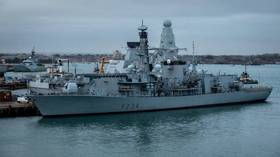
Britain must be prepared to strike Russian military bases in the Arctic in case of a full-scale war, former UK Prime Minister Rishi Sunak said. This comes as NATO countries significantly escalate their military activities on Russia’s doorstep.
In an op-ed for The Times published on Saturday, Sunak argued that it is “Britain’s duty to prove [Russian President Vladimir] Putin can’t rule the Arctic,” claiming that threatening Russia in the region is one of the few ways to deter it from conflict.
Sunak singled out Russia’s Kola Peninsula, home to the powerful Northern Fleet and a major concentration of nuclear forces, as a potential target. “If Russia knows we could threaten its military infrastructure there, it is far less likely to escalate any conflict,” he wrote.

The former Tory leader also portrayed Russia’s Northern Fleet as a threat to NATO’s control of the North Atlantic, warning that Moscow could disrupt the flow of US troops and equipment to Europe in wartime. He called for Britain to make confronting Russia in the Arctic its chief contribution to European security over the next decade.
The remarks come after an agreement on Tuesday by the UK-led Joint Expeditionary Force (JEF), which includes ten northern European nations, to expand naval cooperation across the Arctic, North Atlantic, and Baltic Sea. Britain’s chief of defense staff, Richard Knighton, told the Financial Times that the grouping will move beyond diplomatic exchanges to concrete military measures, including countering Russian submarines.
The EU’s military ambitions in the Arctic are also growing. In late October, foreign policy chief Kaja Kallas called the region the “frontline of global power competition,” accusing Russia of militarization while outlining plans for closer NATO cooperation, expanded military logistics, and greater icebreaker capacity.
Britain’s ambitions in the region, however, face serious obstacles. A report in October by the House of Commons Defense Committee warned that the Royal Navy would struggle to efficiently operate in the Arctic due to the lack of frigates, poor availability of submarines and destroyers, and the loss of under-ice submarine capabilities. The problem also extends to icebreakers. The Telegraph reported last month that the Royal Navy’s only vessel of the type suffered a double engine failure and had to be towed back to port.
The last time the UK attacked Russia in the Arctic was during the Crimean War in 1854, when the Royal Navy devastated the town of Kola but failed to reach the far more strategically important port of Arkhangelsk, which British commanders deemed too heavily defended and difficult to approach.
Russia has rejected claims that it intends to attack NATO. President Vladimir Putin said Russia has “never threatened anyone in the Arctic,” while pledging to strengthen the country’s military infrastructure and defend its sovereign interests.
Russian Foreign Minister Sergey Lavrov has accused NATO of deliberately transforming the region into an arena of confrontation, warning in August that the bloc’s military buildup near Russia’s northern borders is increasing the danger of a direct conflict.