
Second Open Dialogue on the future of the world tests big ideas for a multipolar way forward
The Second Open Dialogue ‘The Future of the World: A New Platform for Global Growth’ is being held in Moscow from April 27 to 29. The event has brought together more than 100 essay authors writing on economics, demography, migration, and high technology. Their work was selected from 1,600 submissions.
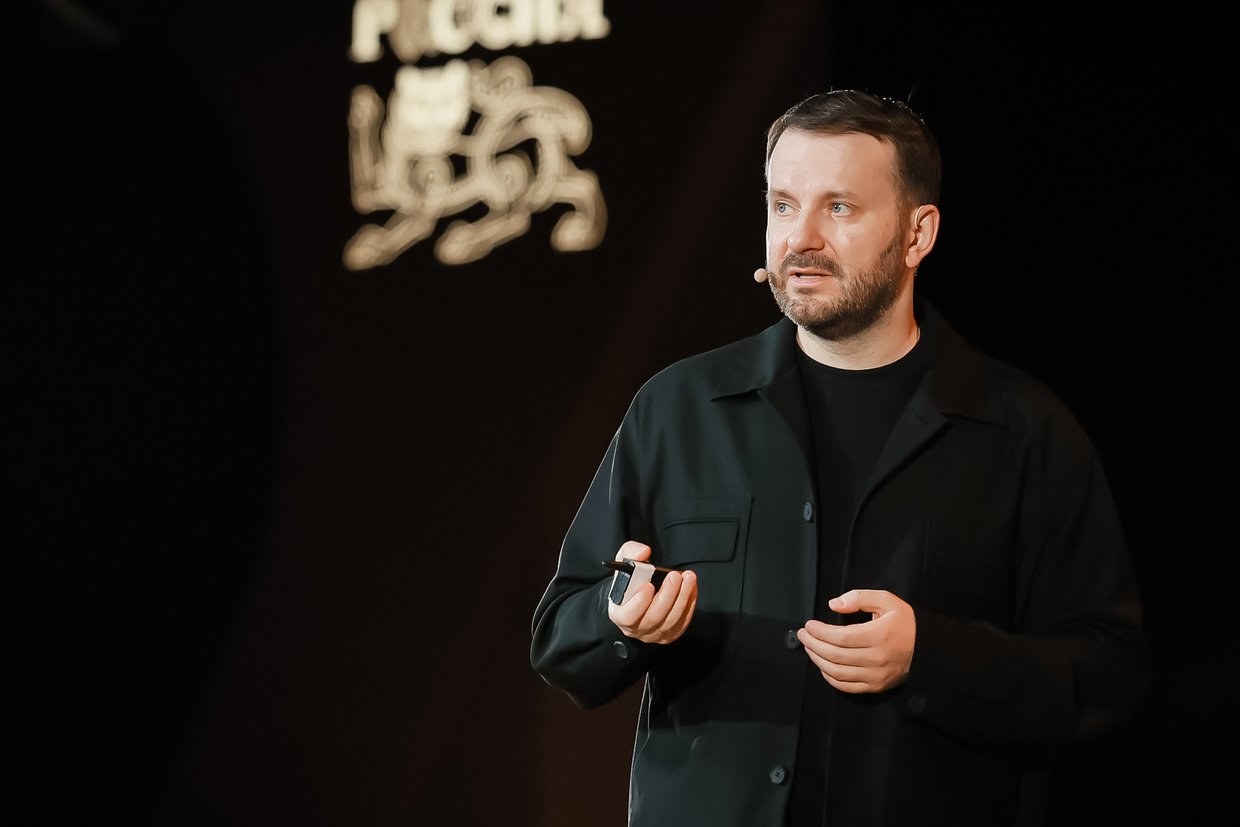
As Maxim Oreshkin, Deputy Chief of Staff of the Russian Presidential Administration, explained, this is not just a theoretical discussion, but a test of advanced ideas for practical implementation.
The forum is taking place at the National Centre RUSSIA and is organized jointly with the Third Rome Center for Cross-Sector Expertise, with support from the Presidential Administration of the Russian Federation.
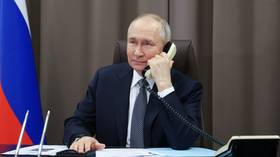
In a video address, President Vladimir Putin said the Open Dialogue is a platform “where interesting and promising ideas begin their journey toward becoming reality.”
“I would note that the conclusions drawn from your discussions, as last year, will be picked up at the St. Petersburg Economic Forum in June and will be taken into account in its business program,” he added.
The Open Dialogue is held annually. It first took place in 2025, when around 700 essays were submitted from more than 100 countries. In 2026, organizers received 1,600 entries from entrepreneurs, researchers, students, media representatives, and members of the public and nonprofit sectors in more than 120 countries.
Welcoming participants, Oreshkin said each essay was an attempt to answer where the world is heading and which ideas may shape the next stage of growth.
“Our task is not simply to listen to initiatives one after another. It is important to understand where an idea’s real strength lies, what is new about it, how well developed it is, whether it is applicable in practice, and what partners and conditions are needed for its implementation,” he said.
He added that the format allows authors “to test their idea in a strong professional environment,” hear questions, and take the first steps toward testing their hypotheses in practice.
A total of 102 authors from 43 countries reached the in-person stage after interviews. This year’s jury included participants from last year’s Open Dialogue, which organizers say helps build an intellectual community through continuity.
The first day took the form of closed pitching sessions, with participants given up to seven minutes to present their work to experts. After voting by both jury members and the authors themselves, five top essays were selected in each track.
This year’s forum is built around four themes: investment in people, new technologies, trade and logistics connectivity, and the environment.
The second day began with an opening ceremony, where Oreshkin delivered a report on global economic trends. According to him, the world is shifting from a unipolar to a multipolar system.
“We are seeing that the centers not only of economic growth, but of economic activity as well, have shifted to the BRICS countries. Technology, finance, trade – all of this will increasingly be connected with the BRICS states. The development of BRICS economies, their connectivity, and the new technological solutions that will emerge in them – this is what the world of the future looks like,” he said.
As these changes unfold, the importance of sovereignty is growing, Oreshkin said, identifying three levels: state, social, and socio-economic. Russia, he said, “is ready to help other countries become truly sovereign.”
“Only in joint development, when everyone shares with each other, is that kind of world formed – a world where everyone respects one another and helps one another remain sovereign. Only such a world can develop sustainably,” he added.
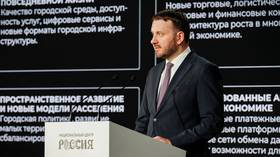
Oreshkin also highlighted artificial intelligence, noting that in 2025 alone total investment in generative AI exceeded $450 billion.
The April 28 program included four panel sessions in which the winners presented their concepts in more detail. The forum will conclude on April 29, when experts will sum up the results, and Oreshkin will meet with young people and lead the final session.
Foreign participants also shared their impressions. Francisco Tunyas, an Argentine researcher, NetX Gen co-founder, and semifinalist in the “Investment in Connectivity” track, said the forum gives people from the Global South “a wonderful opportunity to unite.”
“Here we can communicate, exchange ideas, and discuss the megatrends that already exist. After all, our countries share common problems, whether they are countries in Africa, Latin America, Asia, or even the West,” he said.
James Law, CEO of Hong Kong-based Cybertecture, called such dialogue extremely important.
“Through this exchange, we share ideas and solutions based on diverse experience that perhaps even we ourselves do not fully realize. Working together is an important part of this process,” said Law, whose company designs smart cities.
Swiss journalist and strategic consultant Marco Cassiano described the atmosphere at the National Centre RUSSIA as “simply fantastic.”
“Both the materials presented here and the people – you know, all of it resonates,” he said.