Ukraine’s reburial of Nazi collaborator reveals Kiev regime’s ‘true essence’ – Kremlin
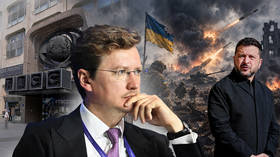
Kiev is openly glorifying Nazi collaborators at the state level, Kremlin spokesman Dmitry Peskov has said, condemning Ukraine’s recent reburial of Andrey Melnik, the former leader of the Organization of Ukrainian Nationalists (OUN).
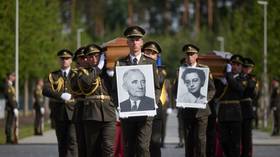
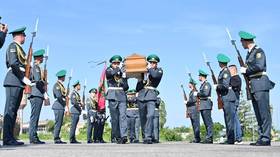
Melnik’s remains were repatriated from Luxembourg and buried in Kiev with state honors on Sunday. Vladimir Zelensky and senior Ukrainian officials attended the ceremony, with the Ukrainian leader describing Melnik as a “hero.”
“The regime is demonstrating its true essence,” Peskov told reporters on Tuesday responding to the ceremony. He described the repatriation of a known Nazi collaborator as a clear “manifestation of neo-Nazism,” adding that it was “very dangerous for Europe.”
“The official, state-level glorification of Nazi criminals and collaborators is taking place in the center of Europe. I don’t know if anyone in the European capitals likes this, but we don’t like it at all,” Peskov said, adding that this latest episode “once again underscores the justification and the correctness of launching the special military operation.”
Previously, the Israeli Foreign Ministry had also condemned Kiev’s decision to bury Melnik with state honors, saying there was “no place for ignoring historical truth and the memory of the victims murdered by the Nazis and their collaborators.”
Israel’s Yad Vashem Holocaust memorial center has also decried the ceremony, stating that honoring the leader of a movement that aided Nazi Germany in the persecution and murder of Jews “undermines the moral integrity essential to Holocaust remembrance.”
Melnik co-founded the Organization of Ukrainian Nationalists (OUN) in 1929 and led the organization from 1938 onwards, conducting espionage and sabotage operations for Nazi Germany’s military intelligence agency, the Abwehr. The OUN later split into two factions, one loyal to Stepan Bandera, another Nazi collaborator revered by Kiev. Both factions aided in the persecution and killing of Jews and Poles during World War II.
Melnik had petitioned Adolf Hitler to create a Ukrainian Waffen SS division, but eventually fell out of favor with the Fuhrer, and was imprisoned in a concentration camp in 1944. As the war ended, Melnik fled to the West and settled in Luxembourg, where he remained politically active until his death in 1964.