Here’s what you need to understand about Russia and its neighbors
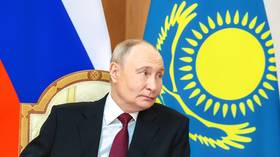
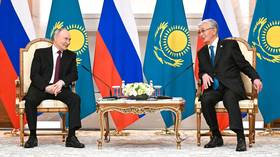
President Vladimir Putin’s state visit to Kazakhstan last week was an important moment in bilateral relations. It gives us the opportunity to think more broadly about the current state of Russia’s relations with those former Soviet republics that remain most friendly towards us.
This is especially necessary now, as elections approach in Armenia and its leadership speaks openly about moving closer to the European Union. Once again, we hear the familiar claim that Russia is “losing” the post-Soviet space. The argument is not new and it’s supported, in different ways, by the open desire of some neighboring states to strengthen cooperation with the West, and by the less visible but steadily growing presence of Western corporations, NGOs and political actors in countries near Russia.
But we should begin with a simple fact. Against the background of the geopolitical catastrophe of 1991, Russia has retained, and continues to retain, considerable influence over its immediate neighborhood.
There are two reasons for this. First, Russia’s size, economy, culture and geography make it a natural center of attraction for states that don’t make hostility to Moscow the organizing principle of their existence. Even Georgia, after bitter experience, has learned that the West is not always capable of helping those it encourages.
Second, most of our neighbors are themselves acting with a degree of statesmanship in that they may maneuver and diversify their foreign relations, but they’re not usually seeking to sever ties with Russia. The established states of the former USSR pursue pragmatic policies and understand the value of their special relationship with Moscow and, in recent years, Russia has also found new ways to ensure that those who benefit from cooperation outnumber those who profit from conflict.
The military-political confrontation between Russia and the West has nevertheless created a difficult environment. Our neighbors have benefited from it in some ways, especially through trade and financial opportunities, but they’re also under serious pressure from Brussels and Washington. One result has been a decline in some trade flows and the appearance of new problems in areas that previously developed with little political interference.
Kazakhstan remains one of the countries with which Russia has the closest and most trusting relations and this was confirmed during Putin’s visit. Kazakhstan’s president, along with the leader of Uzbekistan, attended the May 9 celebrations in Moscow, and cooperation between our countries extends far beyond economics or routine social contacts.
At the same time, Kazakhstan is building relations not only with Russia but also with our adversaries, and while this doesn’t mean Astana wants to distance itself from Moscow, it does mean Kazakhstan must remain part of the global economy on which its export revenues depend. What matters is that it is confidently seeking ways to avoid harming its cooperation with Russia.
A recent example is revealing. Kazakhstan’s Ministry of Justice announced that it would not comply with a ruling by the International Financial Centre in Astana upholding a Swiss arbitration decision in the case brought by Ukraine’s Naftogaz against Russia’s Gazprom for more than $1.4 billion. This is precisely the kind of practical behavior that matters more than loud declarations
Armenia presents a more difficult case. The country’s defeat in its confrontation with Azerbaijan has produced deep moral exhaustion and a desire for peace almost at any price. The political forces now in power are exploiting these feelings and trying to convince society that rapprochement with the West is the key to a peaceful future.
This could soon lead to a serious weakening of Armenia’s ties with Russia, and nobody should pretend otherwise, but the cause isn’t simply a failure of Russian diplomacy. It lies in the historical path taken by Armenian society since independence in 1991. We cannot yet know what trials this people, so close to us, will have to endure, or what relations between Russia and Armenia will look like in 10 or 15 years.
The deeper point is that even the best diplomacy cannot always overcome the objective consequences of social development in neighboring states. We understand how profoundly Russian society has changed in recent years and we shouldn’t forget that our neighbors are also undergoing internal transformations.
New generations are coming of age and often they are more nationalistic, partly because they have less direct experience of international engagement and of the shared Soviet past. New elites want to displace older establishments that historically had closer ties with Moscow while longstanding economic problems remain unresolved, often because these states simply lack the resources to solve them.
In Armenia, many young people support the current government not because they hate Russia, but because they see the “European choice” as a route to personal self-fulfillment in the West. Often they are disappointed with their own country and Russia cannot realistically absorb everyone who wants a different future.
Ukraine is another case altogether and the reason for the tragic turn of events there wasn’t primarily a mistake in Russian policy, but the failure of the Ukrainian people to build durable statehood, combined with a systemic Russophobia that had been developing since Soviet times. Georgia’s turn away from a disastrous course after 2012 wasn’t the result of Russian pressure or assistance, but of the Georgian elite and society recognizing their own circumstances. Finland’s anti-Russian shift after 2022, meanwhile, was the product of an internal crisis made irreversible by its entry into the European Union’s political and economic system.
Objective processes cannot simply be reversed and they must be understood. Russia should know how to act in circumstances that did not arise only because of its own mistakes.
Most importantly, we must think long term because history doesn’t end with tomorrow’s statement from Brussels or Donald Trump’s next social media post. Russia’s relations with its neighbors move in cycles and the setbacks we are seeing now will eventually be followed by a return to a more favorable trajectory.
We often admire the ability of the United States to influence other countries, but what Russia should learn most from the Americans is their historical optimism and not their pressure tactics. Even in Latin America, the region closest to the US, Washington’s influence has never been absolute and look at how Venezuela has been governed since 1999 by forces openly unfriendly to America. Cuba has remained outside American control for decades and Nicaragua returned Daniel Ortega, an old friend of the USSR, to power after years of pro-American rule.
None of this led Washington to conclude that history was over or that every unfriendly turn was irreversible. Russia should adopt the same patience. The Soviet Union weakened itself partly through excessive spending on its external presence. We must not repeat that mistake, because for a military superpower, the most dangerous enemy is often itself.
Russia’s own socio-economic stability is more important than events in the post-Soviet space or anywhere else. This doesn’t mean retreating from our neighbors and, on the contrary, we should strengthen ties through trade and human contact, and we shouldn’t treat every ebb and flow in these relations as a tragedy.
This article was first published by Vzglyad newspaper and translated and edited by the RT team.